Insurance · Protecting Large Commercial
Protecting Large Commercial Properties in Texas: Commercial Property Insurance
Commercial property insurance pays to repair or replace your building, equipment, and inventory when fire, storms, theft, or other covered events cause damage to your Texas business property. Large commercial properties face amplified versions of every risk—higher replacement costs, longer rebuild timelines, and bigger revenue losses during downtime. Working with an independent commercial insurance agent who can compare 18+ carriers is the most effective way to build coverage that actually matches your exposure.
Ready to compare? Get Your Free Quote
The Coinsurance Penalty Trap
- An 80% coinsurance clause on a $4 million building insured at only $2.4 million reduces a $500,000 claim payout to $375,000—you absorb $125,000
- Texas construction costs rose 25–35% since 2020, which means a valuation set 3 years ago likely triggers coinsurance penalties on today’s claim
- Standard 12-month business income limits fall short when Texas rebuilds take 18–24 months due to permitting delays and contractor shortages after storms
- Ordinance-or-law gaps add 15–25% to rebuild costs for pre-2000 buildings that must meet current energy, fire suppression, and ADA codes
The Real Numbers
- Large Texas commercial properties pay $0.50–$2.50 per $100 of insured value, which means a $5 million building costs $25,000–$125,000 per year
- A 3% wind/hail deductible on a $10 million warehouse means $300,000 out of pocket before your carrier pays a single dollar on storm damage
- Monthly revenue losses of $50,000+ during a 12–18 month rebuild total $600,000–$900,000—none of it recoverable without business income coverage
- Equipment breakdown coverage for HVAC, elevators, and electrical panels costs just $500–$2,000 per year but covers $25,000+ repair bills your property policy excludes
The Annual Valuation Cycle
- Update your building valuation annually at minimum because a $4 million building from 2022 may cost $5.2 million to rebuild in 2026 at current Texas rates
- Request an agreed-value endorsement to lock in a pre-approved valuation and eliminate the coinsurance penalty entirely at claim time
- Review business income limits 90 days before renewal using your latest P&L—80% of underinsured businesses never recover to pre-loss revenue after a major event
- Commercial flood coverage through NFIP caps at $500,000—far below what a $5 million property needs—so private flood carriers fill the gap with limits to $50 million
The Canopy Advantage
- Every commercial property account is quoted across 18+ carriers including CNA, Hartford, Travelers, and Burns & Wilcox for the best coverage and price
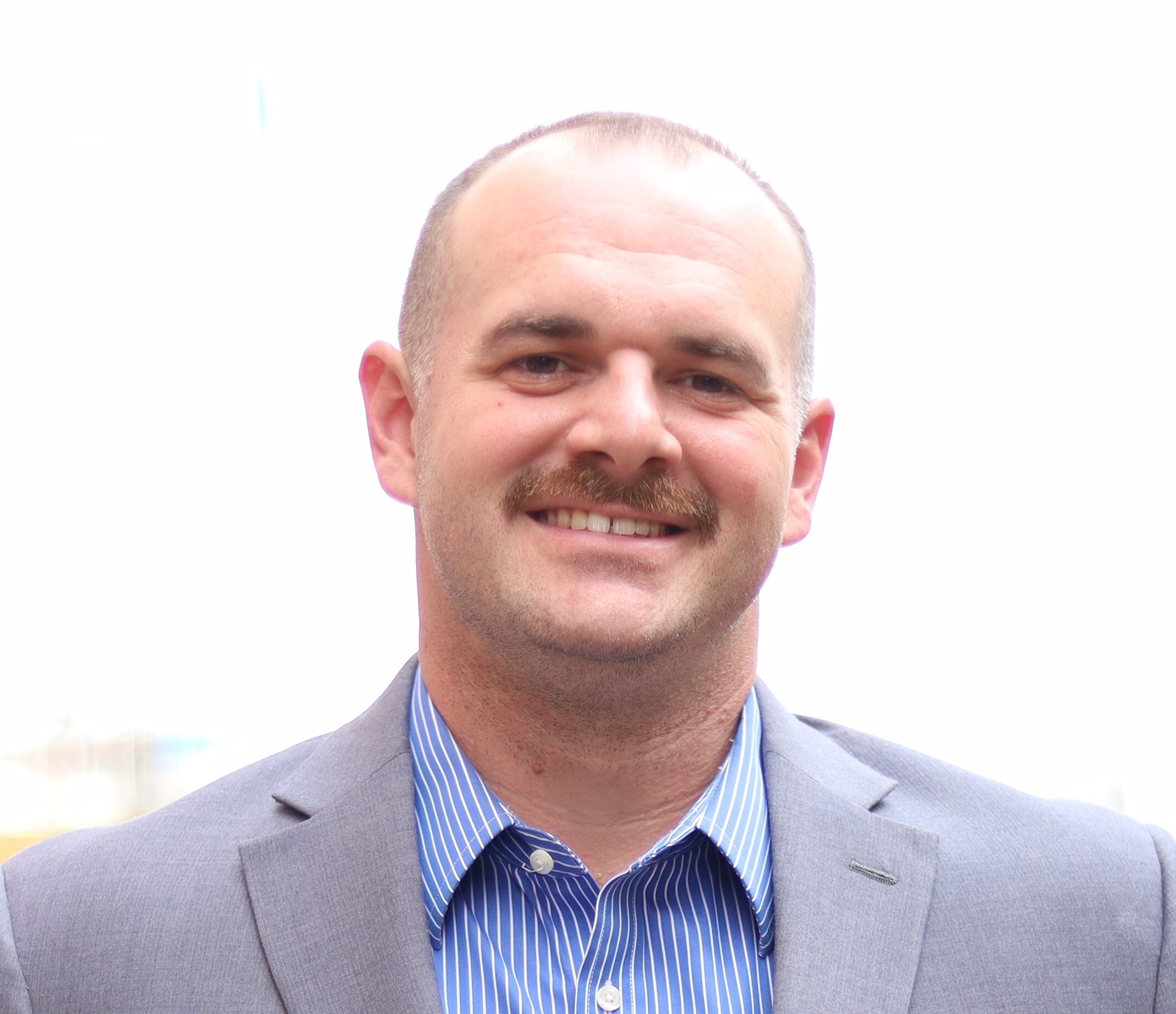
- EJ Nadolny personally reviews large property accounts with 15+ years of commercial expertise, catching coinsurance risks and gaps generalist agents miss
- Your dedicated account manager conducts pre-renewal reviews 90 days out, updating valuations and re-shopping coverage across all available carriers
- Canopy’s 99.1% retention rate and 108% premium retention prove that commercial property owners stay because their coverage is built correctly from day 1
What does commercial property insurance cover in Texas?
Commercial property insurance covers your building structure, business equipment, inventory, furniture, and lost income when a covered peril—such as fire, wind, hail, lightning, or theft—damages your property. Flood and earthquake require separate policies.How much does commercial property insurance cost for large buildings in Texas?
Large commercial properties in Texas typically pay $0.50–$2.50 per $100 of insured value annually. A $5 million building might cost $25,000–$125,000 per year depending on construction type, location, occupancy, and claims history.Do I need separate flood insurance for my commercial building?
Yes. Standard commercial property policies exclude flood damage from all sources. Commercial flood insurance is available through the NFIP up to $500,000 or through private carriers for higher limits that large properties typically need.What Does Commercial Property Insurance Actually Cover?
Commercial property insurance covers three core categories: the building itself, business personal property inside, and lost income while the building is unusable. In my experience writing commercial property in Texas, the business income component is the one most owners underestimate until a loss shuts them down for months. Each category responUnderstanding these three coverage parts is critical for large commercial properties because gaps in any one category can result in six- or seven-figure uninsured losses. A warehouse fire that destroys the building but leaves you without business income coverage means you are still paying the mortgage, property taxes, and employee salaries while earning nothing. Every independent agent comparison should start with verifying that all three categories carry adequate limits.hree categories carry adequate limits.Three Pillars of Commercial Property Coverage
- Building coverage: Pays to repair or replace the physical structure, including the roof, walls, foundation, permanently installed fixtures, HVAC systems, and electrical wiring up to the policy limit
- Business personal property (BPP): Covers movable assets inside the building such as equipment, inventory, furniture, computers, and supplies—items you would take with you if you moved locations
- Business income / extra expense: Replaces net income lost during the restoration period and pays additional costs to operate from a temporary location, keeping your business alive while repairs happen
- Tenant improvements: If you lease your space, this covers upgrades you made to the building at your own expense, such as interior build-outs, custom wiring, or specialized flooring
How Do Coinsurance Clauses and Valuation Methods Work?
The most common trap I see in commercial property coverage is an owner who insured the building at purchase price instead of replacement cost, then faces a coinsurance penalty that reduces every claim payout. Coinsurance is a policy condition that requires you to insure your building to at least a stated percentage of its replacement cost—typically 80%, 90%, or 100%—or face a penalty at claim time. This is the single most misunderstood provision in commercial property insurance.If your building has a replacement cost of $4 million and your policy carries an 80% coinsurance clause, you must insure it for at least $3.2 million. If you only carry $2.4 million in coverage (75% of value) and suffer a $500,000 loss, the carrier applies the coinsurance penalty formula: ($2.4M ÷ $3.2M) × $500,000 = $375,000. You absorb the remaining $125,000 yourself, even though the loss was well within your policy limit.Warning: Coinsurance penalties apply to partial losses, not just total losses. A $200,000 roof repair claim on an underinsured $6 million building can result in a $50,000–$60,000 penalty that the building owner pays out of pocket. Review your building valuation annually—construction costs in Texas have risen 25–35% since 2020.
Valuation Methods Compared
The valuation method your policy uses determines how much you collect after a covered loss. The three most common methods have dramatically different financial outcomes for large commercial properties.| Valuation Method | How It Works | Best For | Risk Level |
|---|---|---|---|
| Replacement Cost Value (RCV) | Pays the current cost to rebuild or replace with materials of like kind and quality, without deducting for depreciation | Most commercial buildings where the owner intends to rebuild after a loss | Low — covers full rebuild cost |
| Actual Cash Value (ACV) | Pays replacement cost minus depreciation based on the age and condition of the property at the time of loss | Older buildings nearing end of useful life where lower premiums are the priority | High — depreciation can reduce payouts 30–50% |
| Agreed Value | Carrier and policyholder agree on the building’s value upfront; eliminates the coinsurance clause entirely at claim time | Large or unique properties where coinsurance penalties pose the greatest financial risk | Lowest — no coinsurance penalty, pre-approved value |
| Functional Replacement Cost | Pays to replace the building using modern, equivalent materials rather than original materials (e.g., drywall instead of plaster) | Historic or older buildings where exact replication is impractical or prohibitively expensive | Medium — adequate but may not cover exact restoration |
What Texas-Specific Risks Threaten Large Commercial Properties?
Texas commercial properties face three hazard categories that drive up both premiums and uninsured loss potential: wind/hail, flooding, and foundation movement. Each requires specific coverage strategies beyond a standard property policy.Wind and Hail
Texas leads the nation in hail damage, with annual insured losses exceeding $1 billion in severe years. Commercial property policies in Texas carry separate wind/hail deductibles of 2–5% of the building’s insured value. On a $10 million warehouse, a 3% wind/hail deductible means $300,000 out of pocket before the carrier pays a single dollar. Large flat-roof commercial buildings are particularly vulnerable because hail impacts accumulate across the entire roof surface, often causing damage that exceeds the deductible but only by a fraction—making the effective recovery minimal.Wind/Hail Exposure for Large Buildings
- Percentage deductibles scale with value: A 2% deductible on a $3 million building is $60,000, but on a $15 million building it jumps to $300,000—often more than the entire claim on moderate storm events
- Flat-roof vulnerability: Commercial flat roofs collect hailstones rather than deflecting them, leading to membrane punctures, ponding water damage, and accelerated deterioration that may not be visible until leaks appear
- Coastal wind pools: Properties within Tier 1 coastal zones (within 6 miles of the Gulf Coast) may need Texas Windstorm Insurance Association (TWIA) coverage, which has lower limits and higher deductibles than standard carriers
- Mitigation discounts available: Impact-resistant roofing, reinforced doors, and hurricane straps can reduce wind/hail premiums 5–15% depending on the carrier and the specific improvementscommercial flood insurance policy is required to cover rising water, storm surge, flash flooding, and heavy rainfall accumulation. The NFIP limits commercial flood coverage to $500,000 for the building and $500,000 for contents—nowhere near adequate for a $5 million or $10 million commercial property. Private flood carriers through independent agents offer limits up to $50 million or more, tailored to large building values.more, tailored to large building values.
Foundation and Soil Movement
Texas expansive clay soils cause billions of dollars in foundation damage annually. Standard commercial property policies exclude earth movement, settling, and soil expansion. Foundation endorsements are available from select carriers but rarely cover the full cost of commercial foundation repairs, which can run $100,000–$500,000 on large buildings. Pre-loss engineering assessments and proper drainage systems are the most cost-effective mitigation strategies.Pro Tip: Ask your agent about difference-in-conditions (DIC) policies. A DIC policy fills gaps left by your standard commercial property policy, covering perils like flood, earthquake, and foundation movement under a single policy with higher limits than standalone endorsements. For large Texas commercial properties, a DIC policy can be more cost-effective than buying three separate gap-fill policies.What Coverage Strategies Work Best for Large Commercial Properties?
Large properties need coverage structures that go beyond standard single-building policies. Blanket policies, agreed value endorsements, and extended business interruption periods address the unique exposures of high-value commercial real estate.Owners with multiple buildings or locations benefit most from these strategies because they reduce administrative complexity while eliminating gaps that appear when each property is insured on a separate, standalone policy. A business owner’s policy (BOP) bundles property and liability for smaller operations, but large commercial properties typically exceed BOP eligibility limits and require standalone commercial property policies with these specialized endorsements.Large Property Coverage Strategies
- Blanket policy: Wraps multiple buildings, locations, or property types under a single aggregate limit, allowing unused capacity from one building to apply to a loss at another—eliminating the risk of being underinsured at any single location
- Agreed value endorsement: Locks in a pre-approved building valuation with the carrier, eliminating coinsurance penalties entirely and providing certainty about the recovery amount after a covered loss
- Extended business income: Standard policies cover lost income during the repair period, but extended business income continues payments for 30–365 additional days after repairs are complete while revenue ramps back to pre-loss levels
- Ordinance or law coverage: Pays the additional cost to bring a damaged building up to current building codes during reconstruction, which can add 15–25% to rebuild costs for older commercial buildings in Texas
What Are the Most Common Coverage Gaps for Large Properties?
Large commercial property owners consistently discover the same coverage gaps after a loss event. Files I see in this category most often involve water damage from a burst pipe or roof leak that went undetected over a weekend, turning a minor issue into a major claim. These gaps exist because standard policies are designed for average-sized businesses, not high-The financial impact of each gap scales with property value. A missing endorsement that costs a small business $10,000 in uninsured losses can cost the owner of a $10 million commercial property $500,000 or more. Understanding where gaps exist before a loss occurs is the entire point of working with a commercial lines specialist rather than a generalist agent. Cyber insurance is another frequently overlooked coverage for large commercial property owners who rely on building management systems, security networks, and digital lease management platforms.tworks, and digital lease management platforms.Coverage Gaps That Cost Large Property Owners the Most
- Inadequate business income limits: Standard 12-month business income limits often fall short for large properties where rebuilds take 18–24 months due to permitting delays, material lead times, and contractor availability in Texas
- Equipment breakdown exclusion: Standard property policies exclude mechanical and electrical breakdown of boilers, HVAC systems, and elevators—a separate equipment breakdown policy is needed and often costs only $500–$2,000 per year
- Ordinance or law shortfall: Rebuilding a pre-2000 commercial building to current Texas energy codes, ADA requirements, and fire suppression standards can add 20–30% to the rebuild cost, none of which is covered without this endorsement
- Utility services interruption: If an off-premises power line failure shuts down your building for a week, standard policies may not cover the resulting business income loss without a utility services endorsement
- Tenant improvements gap: Landlords often assume their tenants’ improvements are covered under the building policy, but most policies exclude tenant-installed build-outs unless specifically endorsed—a distinction that matters for commercial landlords
How Does Canopy Help Commercial Property Owners Compare Carriers?
Canopy Insurance compares 18+ commercial carriers on every account, including CNA, Hartford, Travelers, Nationwide, and Burns & Wilcox, to find the coverage structure and price that best fits each property’s risk profile. A single-carrier agent cannot offer this comparison.EJ Nadolny, Canopy’s Commercial Lines Coverage Specialist with 15+ years of commercial insurance experience and a background as Director of Commercial Insurance, personally reviews large property accounts to identify coinsurance risks, coverage gaps, and carrier-specific endorsements that generalist agents miss. Every client receives a dedicated account manager, pre-renewal policy reviews, and annual re-marketing across all carriers—a process that contributes directly to Canopy’s 99.1% client retention rate and 108% premium retention.Large commercial properties also need to coordinate property coverage with workers’ compensation for on-site employees and professional liability if the business provides advisory or consulting services from the property. An independent agent structures all of these coverages together to eliminate overlaps and close gaps.What Canopy Delivers for Commercial Property Owners
- 18+ carrier comparison: Every account is quoted across CNA, Hartford, Travelers, Nationwide, Burns & Wilcox, and 12+ additional carriers to find the best combination of coverage breadth, limit adequacy, and premium
- Dedicated account manager: One person manages your policy from the initial quote through every renewal, knows your buildings, and advocates for you during claims—no call centers, no handoffs
- Pre-renewal reviews: 90 days before renewal, your account manager re-shops your coverage across all carriers, reviews updated building valuations, and identifies new endorsements that address emerging risks
- Statewide reach from San Antonio: Canopy serves commercial property owners across all of Texas, from Gulf Coast warehouse portfolios to DFW office complexes and West Texas industrial facilities
The Bottom Line
Large commercial properties in Texas face outsized risks from wind and hail damage, flood exclusions, coinsurance penalties, and extended rebuild timelines that can cost hundreds of thousands of dollars in uninsured losses. Standard policies designed for smaller businesses leave dangerous gaps in building valuation, business income limits, and ordinance compliance. The difference between adequate protection and a catastrophic coverage shortfall often comes down to endorsements and policy structures—blanket coverage, agreed value, extended business income—that only an experienced commercial lines specialist will recommend. Canopy Insurance compares 18+ carriers on every account, assigns a dedicated account manager, and re-shops your coverage at every renewal to keep your properties protected at the best available price. Next step: get a free commercial property insurance quote and let Canopy’s team build coverage that matches your property’s actual risk profile.Frequently Asked Questions
What is the difference between a blanket policy and a scheduled policy?
A scheduled policy lists each building with its own coverage limit, while a blanket policy groups multiple buildings under a single aggregate limit. Blanket policies provide more flexibility because unused limit from one location can cover a shortfall at another, reducing the risk of being underinsured at any single property.How often should I update my commercial building valuation?
Annually at minimum, and immediately after any major renovation or market shift. Texas construction costs have risen 25–35% since 2020, meaning a building valued at $4 million three years ago may cost $5.2 million or more to rebuild today. An outdated valuation triggers coinsurance penalties.Does commercial property insurance cover tenant belongings?
No. The building owner’s commercial property policy covers the structure and landlord-owned property. Tenants must carry their own commercial property or business personal property coverage for their equipment, inventory, and improvements. Lease agreements should require tenants to maintain adequate coverage.What is ordinance or law coverage and why do large buildings need it?
Ordinance or law coverage pays the extra cost to bring a damaged building up to current building codes during reconstruction. Older commercial buildings in Texas often must comply with updated energy, fire suppression, ADA, and seismic codes that did not exist when they were built, adding 15–25% to rebuild costs.Can I reduce my wind/hail deductible on a large commercial building?
Some carriers offer buy-down options that reduce the percentage-based deductible to a flat dollar amount for an additional premium. Impact-resistant roofing, reinforced entry points, and documented mitigation measures can also qualify your building for lower deductibles or premium credits depending on the carrier.How long does business income coverage last after a commercial property loss?
Standard policies cover lost income during the restoration period, typically 12 months. Extended business income endorsements add 30–365 days after repairs are complete to cover the revenue ramp-up period. Large properties with long rebuild timelines should carry at least 18–24 months of business income coverage.Is commercial property insurance required by law in Texas?
Texas does not legally require commercial property insurance, but your mortgage lender or landlord almost certainly does. Beyond contractual requirements, operating a large commercial property without property coverage exposes you to total financial loss from a single fire, storm, or catastrophic event.What is the difference between named-peril and open-peril commercial property coverage?
Named-peril policies only cover losses from perils specifically listed in the policy (fire, lightning, windstorm, etc.). Open-peril (also called special form or all-risk) policies cover every cause of loss except those specifically excluded. Open-peril coverage is broader and recommended for large commercial properties.Sources & Further Reading