Home Insurance · Policy Types
What Is an HO-5 Insurance Policy? (2026 Guide)
An HO-5 is a premium homeowners policy that covers both your dwelling and personal property on an open peril basis. Unlike an HO-3, which limits personal property to 16 named perils, an HO-5 covers your belongings against everything unless the policy specifically excludes it.Get Your Free Quote
What It Is
The broadest homeowners form available. Open peril on both dwelling and personal property. Fewer claim denials because the burden of proof shifts to the carrier.Who Needs It
Homeowners with valuable personal property — jewelry, art, electronics, musical instruments — or anyone who wants the strongest coverage available.What It Costs
Typically 15-30% more than an HO-3 on the same home. On a $400K Texas home, that is roughly $600-$1,500/year more for significantly broader protection.Canopy Advantage
Not every carrier offers HO-5 in Texas. We know which of our 18+ carriers write it, at what price point, and which homes qualify.Is HO-5 worth the extra cost?
If you own more than $50,000 in personal property or have items that are hard to replace, HO-5 is usually worth the premium difference. The open peril coverage on belongings means fewer claim denials and a simpler claims process.Can any home get an HO-5 policy?
Not always. Most carriers require the home to meet minimum value thresholds ($300K-$500K dwelling), be in good condition, and have an updated roof. Older homes or homes in high-risk areas may only qualify for HO-3.Does HO-5 cover flood or earthquake?
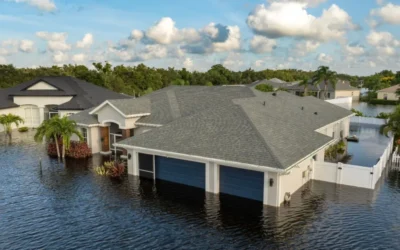
No. Like HO-3, flood and earthquake are excluded from HO-5. You still need separate policies for those perils regardless of which homeowners form you carry.HO-5 vs HO-3: The Key Difference
Both HO-3 and HO-5 cover the dwelling on an open peril basis. The difference is entirely about personal property. On an HO-3, your belongings are only covered if the cause of loss matches one of 16 named perils. On an HO-5, your belongings get the same open peril treatment as your house — covered unless specifically excluded.| Feature | HO-3 (Standard) | HO-5 (Premium) |
|---|---|---|
| Dwelling coverage | Open peril | Open peril |
| Personal property coverage | Named peril (16 perils) | Open peril |
| Burden of proof on claims | You prove it was a named peril | Carrier proves an exclusion applies |
| Typical cost premium | Baseline | 15-30% more |
| Carrier availability | All carriers | Select carriers (premium tiers) |
| Personal property valuation | Usually ACV (depreciated) | Usually replacement cost (new) |
What an HO-5 Policy Covers
HO-5 includes the same six coverage sections as HO-3 (Coverages A through F) but upgrades Coverage C to open peril.Coverage Sections
- Coverage A (Dwelling): Open peril — same as HO-3. Your home structure, attached garage, built-in fixtures.
- Coverage B (Other Structures): Detached structures at 10% of Coverage A. Open peril.
- Coverage C (Personal Property): Open peril — the HO-5 upgrade. Covers all belongings unless excluded. Typically at replacement cost rather than ACV.
- Coverage D (Loss of Use): Additional living expenses if home is uninhabitable. 20-30% of Coverage A.
- Coverage E (Liability): $100K-$500K personal liability for injuries or damage you cause.
- Coverage F (Medical Payments): $1K-$5K no-fault medical for guest injuries.
Why Open Peril on Personal Property Matters
The personal property upgrade is the entire reason HO-5 exists. Here are real scenarios where HO-5 pays and HO-3 does not.| Scenario | HO-3 Result | HO-5 Result |
|---|---|---|
| You accidentally spill coffee on a $2,500 laptop | Denied — accidental damage is not a named peril | Covered — accidental damage is not excluded |
| Your child breaks a $4,000 TV during play | Denied — breakage is not a named peril | Covered — breakage is not excluded |
| Power surge fries your home theater system | Likely denied unless caused by lightning | Covered — electrical damage is not excluded |
| Paint spills on hardwood floors during DIY project | Denied — not a named peril | Covered — accidental damage to contents |
| Jewelry lost (not stolen) while traveling | Denied — mysterious disappearance is not named | Covered (if scheduled, up to policy limit) |
How Much Does an HO-5 Cost in Texas?
HO-5 premiums run 15-30% higher than an equivalent HO-3. The exact difference depends on carrier, dwelling value, and personal property amount.| Dwelling Value | HO-3 Premium (est.) | HO-5 Premium (est.) | Annual Difference |
|---|---|---|---|
| $300,000 | $3,200-$4,200 | $3,800-$5,200 | $500-$1,000 |
| $500,000 | $4,500-$6,500 | $5,500-$8,000 | $800-$1,500 |
| $750,000 | $6,000-$9,000 | $7,500-$11,500 | $1,200-$2,500 |
| $1,000,000+ | $8,000-$14,000 | $10,000-$18,000 | $2,000-$4,000 |
Agent Tip: The carriers most likely to offer competitive HO-5 pricing in Texas are Chubb, PURE, Travelers (Quantum Home 2.0), Safeco, and Cincinnati Financial. If your home is valued above $500K and in good condition, at least two of these will typically quote. Below $300K dwelling value, most carriers only offer HO-3.
Who Should Buy an HO-5 in Texas?
HO-5 Makes Sense When
- High personal property value: $75,000+ in furnishings, electronics, collectibles, wardrobe
- Hard-to-replace items: Antiques, custom furniture, art, musical instruments
- Home office equipment: Expensive electronics and tools vulnerable to accidental damage
- New or recently renovated home: High-value finishes and built-ins you want maximum protection for
- Low risk tolerance: You want the broadest coverage and simplest claims process available
HO-3 Is Probably Fine When
- Personal property value is under $50,000
- No individual items worth more than the standard sub-limits ($1,500 jewelry, $2,500 firearms)
- Budget is the primary concern and you would rather schedule individual high-value items on an HO-3
What HO-5 Still Excludes
Open peril does not mean everything is covered. HO-5 carries the same core exclusions as HO-3 — flood, earthquake, wear and tear, intentional damage, government action, and nuclear/war. It also excludes:- Mechanical breakdown of appliances (add equipment breakdown endorsement)
- Wind/hail in TWIA counties (separate windstorm policy required)
- Pest damage — termites, rodents, insects
- Settling, cracking, shrinking of foundations and structures
- Business property used for commercial purposes (need a commercial policy or endorsement)
The Bottom Line
HO-5 is the strongest homeowners policy form available. It eliminates the named peril limitation on personal property that HO-3 carries, which means fewer claim denials and broader protection for your belongings. The 15-30% premium increase is real, but for homeowners with significant personal property or a preference for comprehensive coverage, the math works. The key is comparing HO-5 quotes across carriers — premium differences on the same home can run $1,000+ between companies.Frequently Asked Questions
What does HO-5 stand for?
HO stands for Homeowners and 5 is the ISO form number. It designates the comprehensive form — open peril on both dwelling and personal property.Is HO-5 the best homeowners insurance?
It is the broadest standard form available. Whether it is the best value depends on your personal property value and risk tolerance. For homes under $300K with modest belongings, an HO-3 with scheduled items may be more cost-effective.Does HO-5 cover accidental damage?
Yes. Accidental damage to personal property (spills, drops, breakage) is covered under HO-5 because it is not listed as an exclusion. This is the single biggest practical difference from HO-3, which does not cover accidental damage.Which insurance companies offer HO-5 in Texas?
Chubb, PURE, Travelers (Quantum Home), Safeco, Cincinnati Financial, and several regional carriers offer HO-5 in Texas. Availability depends on dwelling value, home condition, and location. Not all carriers offer HO-5 for homes under $300K.Can I upgrade from HO-3 to HO-5 mid-policy?
Some carriers allow a mid-term upgrade; others require it at renewal. Your agent can request a re-quote on the same home to see the premium difference. There is no waiting period or new inspection required in most cases.