Renters Insurance in Texas: What Tenants Actually Need
Renters insurance in Texas is not legally required but often mandatory by landlords, costing an average of roughly $23/month. It protects personal property (theft, fire), provides liability coverage if guests are injured, and pays for additional living expenses if the home becomes uninhabitable. Key insurers include State Farm, Allstate, and Lemonade. Key Aspects of Texas Renters Insurance Top Providers in Texas How to Save It is recommended to create a home inventory with photos to help with potential claims. An independent agent who shops 18+ carriers matches your specific needs to the most competitive rate available in the Texas market.
Ready to compare? Get Your Free Quote
The “My Landlord’s Insurance Covers Me” Trap
- See the detailed section below for specific coverage details, cost comparisons, and Texas-specific requirements
- See the detailed section below for specific coverage details, cost comparisons, and Texas-specific requirements
- See the detailed section below for specific coverage details, cost comparisons, and Texas-specific requirements
- See the detailed section below for specific coverage details, cost comparisons, and Texas-specific requirements
The Real Numbers
- See the detailed section below for specific coverage details, cost comparisons, and Texas-specific requirements
- See the detailed section below for specific coverage details, cost comparisons, and Texas-specific requirements
- See the detailed section below for specific coverage details, cost comparisons, and Texas-specific requirements
- See the detailed section below for specific coverage details, cost comparisons, and Texas-specific requirements
The Lease Compliance Checklist
- See the detailed section below for specific coverage details, cost comparisons, and Texas-specific requirements
- See the detailed section below for specific coverage details, cost comparisons, and Texas-specific requirements
- See the detailed section below for specific coverage details, cost comparisons, and Texas-specific requirements
- See the detailed section below for specific coverage details, cost comparisons, and Texas-specific requirements
The Canopy Advantage
- Canopy shops 18+ carriers in a single session — catching the pricing spreads between carriers that most Texas businesses never see when buying direct from a single company
- Your dedicated account manager handles the entire process from quoting through binding — eliminating the back-and-forth delays of online-only platforms and call-center runarounds
- Annual policy reviews catch changes in your business or property — growth, new exposures, shifting market conditions — adjusting coverage before a claim exposes a gap
- Canopy’s 99.1% client retention rate reflects proactive service that keeps coverage optimized and premiums competitive year after year without you needing to ask
How much does renters insurance usually cost in Texas?
See the detailed section below for a complete answer to this question.Is 30-60-25 full coverage in Texas?
See the detailed section below for a complete answer to this question.Is there renters insurance in Texas?
See the detailed section below for a complete answer to this question.Renters Insurance in Texas: What Tenants Actually Need
Your landlord’s insurance covers the building — not your belongings, not your liability, and not your temporary housing if the unit becomes unlivable. At $15–$25 per month, renters insurance is the cheapest protection most Texans will ever buy. Here is exactly what it covers and what to look for.
Ready to compare? Get Your Free Quote
The Bottom Line Up Front
Your landlord's insurance policy covers the building. It does not cover your belongings, your liability, or your living expenses if the apartment becomes uninhabitable. Renters insurance in Texas costs $15 to $25 per month for a standard policy and covers three things that matter: your personal property, your personal liability, and additional living expenses. Most Texas tenants are underinsured or completely uninsured, which means one burst pipe, kitchen fire, or theft wipes out thousands of dollars in personal property with zero reimbursement. A renters policy is the cheapest, most effective insurance product most Texans will ever buy.The Three Core Coverages Every Renter Needs
A standard Texas renters policy — known as an HO-4 in industry terminology — bundles three distinct coverages into a single policy. Each coverage serves a different purpose, and understanding what each one does and does not protect is the difference between having real protection and having a false sense of security. Here is what you are actually buying.Coverage C: Personal Property
- t
- Covers your belongings — furniture, electronics, clothing, kitchen items, and personal possessions — against covered perils like fire, theft, vandalism, and certain water damage t
- Standard policy limits range from $15,000 to $50,000, with most Texas renters choosing $25,000 to $30,000 t
- Applies to your property anywhere in the world, not just inside your apartment (off-premises coverage) t
- Sub-limits apply to high-value categories: jewelry typically capped at $1,500, electronics at $2,500, cash at $200 unless you schedule specific items t
- Does NOT cover your roommate's property unless they are named on the policy
Coverage E: Personal Liability
- t
- Protects you if someone is injured in your rental unit or if you accidentally cause damage to someone else's property t
- Standard limits start at $100,000, with $300,000 available for a small additional premium t
- Covers legal defense costs if you are sued, even if the lawsuit is frivolous t
- Common Texas scenarios: guest slips on wet floor, your dog bites a visitor, your child damages a neighbor's property t
- Does NOT cover intentional acts or business-related liability t
- Extends beyond your rental — covers liability incidents that happen anywhere
Coverage D: Additional Living Expenses (ALE)
- t
- Pays for temporary housing, meals, and other increased costs if a covered event makes your rental uninhabitable t
- Covers the difference between your normal living expenses and your actual costs while displaced t
- Typical ALE limits range from $5,000 to 40% of your personal property coverage amount t
- Common Texas triggers: apartment fire, major water damage, storm damage requiring structural repairs t
- Your landlord is not legally required to provide or pay for your temporary housing in Texas — ALE coverage fills that gap
What Renters Insurance Does NOT Cover in Texas
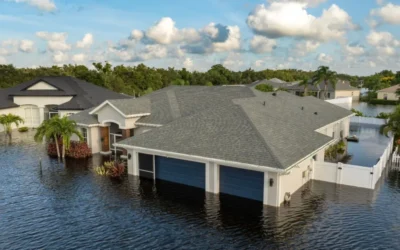
The exclusions on a renters policy are just as important as the coverages. The most common version of this I see is a renter who assumes flood damage from heavy rain is covered, then finds out it requires a completely separate policy. Texas has specific weather and environmental risks that fall outside the standard HO-4 policy, and tenants who assume everything is covered discover the gaps at the worst possible time. Before you buy, understand exactly where your renters policy stops providing protection.Standard Exclusions on a Texas Renters Policy
- t
- Flood damage: Rising water, storm surge, and overland flooding are excluded. If you live in a flood-prone area, you need a separate renter's flood policy (available through NFIP or private flood carriers for $50 to $150/year) t
- Earthquake damage: Rare in most of Texas, but seismic activity in West Texas and North Texas (linked to injection wells) is increasing. Earthquake coverage is a separate endorsement t
- Roommate's belongings: Your policy only covers people named on it. If your roommate's laptop is stolen, your policy pays nothing unless they are listed as a named insured t
- Your car and its contents: Theft from your vehicle is sometimes covered under personal property, but damage to the car itself is an auto insurance claim t
- Pest damage: Bed bugs, termites, rodents, and other infestations are maintenance issues excluded from coverage t
- Wear and tear: Gradual deterioration of your belongings is not a covered loss t
- Business property and equipment: If you work from home, your business computer and inventory may need a separate business property endorsement or commercial policy
Replacement Cost vs. Actual Cash Value: The Critical Choice
When you buy a renters policy in Texas, you will choose between two valuation methods for your personal property claims. This single decision determines whether you receive enough money to actually replace your damaged or stolen belongings, or whether you receive a depreciated payout that covers a fraction of the replacement cost. Most renters do not understand this choice until they file a claim and see the difference in their settlement check.| Coverage Type | How It Pays | Example: 3-Year-Old Laptop ($1,200 new) | Monthly Premium Impact |
|---|---|---|---|
| Replacement Cost Value (RCV) | Pays the cost to buy a new equivalent item at current retail prices, with no deduction for age or depreciation | $1,200 (full replacement) | +$3 to $5/month |
| Actual Cash Value (ACV) | Pays the depreciated value of the item at the time of loss — what it was "worth" when it was damaged or stolen | $450 to $600 (after depreciation) | Base premium (cheapest option) |
Texas Weather Risks That Make Renters Insurance Essential
Texas weather is uniquely destructive to rental properties. I've seen this come up most often after a major hailstorm when tenants realize their landlord's insurance covers the building but not a single item inside their apartment. The state experiences more severe weather events per year than any other state, and renters bear the full financial impact of their personal property losses when these events strike. Your landlord will repair the building. Nobody will replace your belongings unless you carry your own coverage. When I review renters policies in Texas, the liability component is often the most valuable part because a single guest injury in your unit can generate costs well beyond your personal savings.Weather Risks by Texas Region
- t
- Gulf Coast (Houston, Corpus Christi, Galveston): Hurricanes, tropical storms, flooding — wind damage covered by renters insurance<
- North Texas (Dallas-Fort Worth, Denton): Severe hail (Texas averages $1.3 billion in annual hail damage), tornadoes, and straight-line wind events
il damage), tornadoes, and straight-line wind events t - Central Texas (Austin, San Antonio, Waco): Flash flooding, hail, and severe thunderstorms. Austin's Highland Lakes region is particularly flash-flood prone t
- West Texas (Midland, Odessa, El Paso): Dust storms, wildfires, and increasingly frequent minor seismic events t
- Panhandle (Amarillo, Lubbock): Tornadoes, extreme hail, and winter ice storms that cause pipe bursts in older apartment complexes
How to File a Renters Insurance Claim in Texas
When something goes wrong — a break-in, a kitchen fire, a burst pipe — the claims process determines whether your renters insurance actually delivers on its promise. Filing quickly, documenting thoroughly, and understanding your policy's requirements will directly impact the size and speed of your payout. Here is how to handle a claim from start to finish.Step-by-Step Claims Process
- t
- Step 1 — Ensure safety: Address any immediate danger. Call 911 for fire or break-in. Do not re-enter a damaged unit until cleared t
- Step 2 — Document everything: Photograph and video all damage and missing items before cleaning up or making repairs t
- Step 3 — File a police report: Required for theft and vandalism claims. Get the report number for your insurance filing t
- Step 4 — Notify your insurer: Call your carrier or file online within 24 to 48 hours. Provide the incident date, a description of what happened, and your police report number if applicable t
- Step 5 — Prevent further damage: Make reasonable temporary repairs (board a broken window, tarp a leak). Keep receipts — these costs are typically reimbursable t
- Step 6 — Provide your inventory: Submit your home inventory list and receipts showing what you owned and what it cost t
- Step 7 — Work with the adjuster: An adjuster may inspect the damage or request additional documentation. Cooperate fully but do not accept a lowball first offer without reviewing your policy limits
Bundling, Discounts, and Keeping Costs Low
Renters insurance is already one of the most affordable insurance products available, but several strategies can reduce your premium further or increase your coverage without proportionally increasing your cost. Texas is a competitive renters insurance market with dozens of carriers, which works in your favor when shopping for the best rate.Common Discounts for Texas Renters
- t
- Bundling with auto insurance: Combining renters and auto policies with the same carrier typically saves 10% to 20% on one or both policies t
- Security features: Deadbolt locks, smoke detectors, fire extinguishers, and monitored alarm systems can earn 5% to 15% in discounts t
- Claims-free history: No claims in the past 3 to 5 years can reduce your premium by 5% to 10% t
- Higher deductible: Raising your deductible from $500 to $1,000 typically reduces your premium by 15% to 25%, though you will pay more out of pocket on small claims t
- Gated community or secured building: Living in a security-controlled property can lower your premium t
- Automatic payments and paperless billing: Some carriers offer 3% to 5% off for enrollment in auto-pay and electronic statements
Do a Home Inventory Before You Need One
The single most important thing you can do to protect your renters insurance claim is to create a home inventory before a loss occurs. A home inventory documents what you own, what it cost, and what condition it is in. Without one, you are relying on memory to reconstruct a complete list of your belongings after a fire, theft, or storm — and your memory will fail you when you are stressed and displaced.Walk through every room in your rental with your phone camera. Open every drawer, closet, and cabinet. Record video narration describing items and their approximate value. Photograph receipts for high-value items. Save serial numbers for electronics. Store this documentation in the cloud — Google Drive, iCloud, Dropbox — not on a device that could be destroyed in the same event that damages your property. Update your inventory every six months or whenever you make a significant purchase. This 30-minute exercise can mean the difference between a $5,000 claim and a $15,000 claim on the same loss.The Bottom Line
Renters insurance in Texas is not expensive, not complicated, and not optional if you want real financial protection. At $15 to $25 per month, an HO-4 policy covers your personal property against fire, theft, wind, hail, and water damage from burst pipes. It provides liability protection if someone gets hurt in your apartment. And it pays for temporary housing if a covered event forces you out. Your landlord's policy does nothing for you — it protects the building, not your life inside it. Choose replacement cost coverage over actual cash value, do a home inventory now, and consider bundling with your auto policy to offset most or all of the premium cost. There is no good reason for any Texas renter to go without this coverage.Frequently Asked Questions
Does my landlord's insurance cover my personal belongings?
No. Your landlord's property insurance covers the building structure, not your personal possessions inside it. If a fire, theft, or storm damages your belongings, your landlord's policy pays them nothing toward your losses. You need your own renters insurance policy (HO-4) to cover your personal property, liability, and additional living expenses.How much does renters insurance cost in Texas?
A standard Texas renters insurance policy costs between $15 and $25 per month, or roughly $180 to $300 per year. Your exact premium depends on your location, coverage limits, deductible, claims history, and any discounts you qualify for. Bundling with auto insurance typically reduces the combined premium by 10% to 20%.Does renters insurance cover my roommate's stuff?
No, unless your roommate is specifically listed as a named insured on your policy. Each person's belongings are only covered if they are named on the policy. If you share a rental with a roommate, you can either add them to your policy (which combines your coverage limits and claims history) or each get your own separate policy. Separate policies are usually the better approach.Does renters insurance cover flood damage in Texas?
No. Standard renters insurance policies exclude flood damage from rising water, storm surge, and overland flooding. If you live in a flood-prone area of Texas — and many areas outside mapped flood zones still flood regularly — you need a separate renter's flood policy. The NFIP offers renter's flood coverage starting around $50 per year, and private flood insurers offer comparable products.What is the difference between replacement cost and actual cash value?
Replacement cost pays the full cost to buy a new equivalent item at today's retail price. Actual cash value pays the depreciated value — what the item was worth at the time it was lost or damaged. For example, a 4-year-old TV that cost $800 new might have an ACV of $300 but a replacement cost of $800. Replacement cost coverage adds $3 to $5 per month to your premium and is almost always worth it.Is renters insurance required by law in Texas?
No. Texas law does not require tenants to carry renters insurance. However, your landlord can require it as a condition of your lease, and many Texas apartment complexes and property management companies now do. Even if your landlord does not require it, carrying a renters policy is strongly recommended given the low cost and significant coverage it provides.Does renters insurance cover me if my laptop is stolen from my car?
It depends on your policy. Many Texas renters policies cover personal property theft regardless of where it occurs — including from your vehicle — under the off-premises coverage provision. However, some policies exclude theft from vehicles or limit the payout. Check your specific policy language or ask your agent. The vehicle itself is covered by your auto insurance, not your renters policy.How do I file a renters insurance claim in Texas?
Contact your insurance carrier within 24 to 48 hours of the incident. File a police report for theft or vandalism claims. Document all damage with photos and video before making any repairs. Provide your home inventory and receipts for damaged or stolen items. An adjuster will review your claim, and most straightforward claims are settled within 15 to 30 days. If you disagree with the settlement, you can file a complaint with the Texas Department of Insurance.