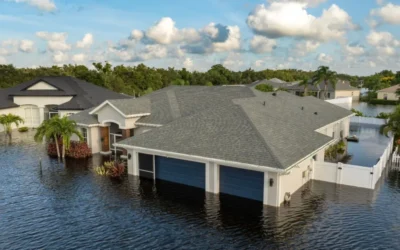
Flood Insurance Cost in Texas
Flood insurance in Texas costs most homeowners between $783 and $2,000 a year, depending on the property’s flood zone, elevation, and coverage limits. FEMA’s National Flood Insurance Program averages $783 annually, but roughly a third of single-family policyholders pay $1,000 to $2,000. Private carriers sometimes undercut NFIP pricing, though their coverage terms and claims processes vary enough that a lower premium alone does not tell the full story.
NFIP Federal Flood Insurance at a Glance
- Texas homeowners pay a FEMA median of roughly $779 per year, though high-risk A and V zones push that closer to $1,031.
- Minimum policies start at $119 per year for $20,000 in building coverage and $8,000 in contents protection.
- Coverage caps at $250,000 for the structure and $100,000 for personal property, leaving a gap for higher-value homes.
Private Flood Insurance at a Glance
- Private carriers can write policies above the federal $250,000 structure cap, closing the gap for homes valued at $400,000 or more.
- Premiums sometimes beat NFIP pricing in moderate-risk zones, with some Texas quotes starting near $119 a year for basic coverage.
- Carrier availability shifts year to year, and a private insurer can choose not to renew after a heavy storm season.
When the NFIP Is the Better Deal
- Homes valued under $250,000 fit cleanly inside federal coverage limits, and NFIP premiums in moderate zones often land below $500 a year.
- NFIP policies renew automatically regardless of prior claims, so a bad flood year does not trigger a cancellation notice at renewal.
- The 30-day waiting period after purchase applies to both federal and private policies, but NFIP locks in pricing without annual re-underwriting surprises.
When Private Flood Insurance Wins
- Homes in moderate-risk zones often qualify for private premiums below the statewide average of $784 per year through competitive underwriting.
- A home valued at $400,000 or more leaves $150,000 or greater uninsured under federal caps, making private coverage the only full-replacement option.
- Annual renewal with a private carrier lets homeowners shop competing quotes each cycle instead of absorbing automatic NFIP Risk Rating 2.0 increases.
How much is flood insurance in Texas per year?
Most Texas homeowners pay between $620 and $784 per year for flood insurance through the National Flood Insurance Program, though costs vary significantly by location and flood zone. Properties in higher-risk areas like Houston average closer to $821 per year, while lower-risk homes can find coverage starting under $500.
How much is home insurance in Texas for a $400,000 house?
Standard homeowners insurance does not cover flooding, so a $400,000 Texas home needs a separate flood policy. Through the NFIP, Texas flood insurance averages around $780 per year, though costs vary based on your property’s flood zone, elevation, and replacement cost value.
Is 250k enough for flood insurance?
For many Texas homes, $250,000 in flood coverage may not be enough. FEMA data shows the average replacement cost for insured single-family homes exceeds $400,000, so a policy at that level could leave a significant gap that private flood insurance can fill.
The Bottom Line Up Front
Flood insurance in Texas averages roughly $780 per year, but your actual premium depends almost entirely on where your property sits relative to FEMA’s flood zones. Homeowners in high-risk areas pay significantly more than those in moderate or low-risk zones, and county-level variation can swing your annual cost by hundreds of dollars in either direction.
Texas homeowners in high-risk flood zones pay about 52% more for NFIP coverage than those in lower-risk areas. County averages range from around $530 per year in Hidalgo County to nearly $1,000 per year in Galveston County. Most buyers purchase through FEMA’s National Flood Insurance Program, though private insurers now compete on price in many Texas markets. Minimum policies can start well below the statewide average, but homes with higher replacement cost values typically push premiums above $1,000 annually.
- The statewide average for flood insurance in Texas runs close to $780 per year.
- High-risk flood zone properties pay roughly 52% more than moderate or low-risk zone homes.
- County-level pricing varies widely, from about $530 in Hidalgo County to $990 in Galveston County.
- FEMA’s NFIP is the primary source, but private flood insurers offer competing rates in Texas.
- Replacement cost value, elevation, and flood zone designation are the biggest factors driving your premium.
What Flood Insurance Actually Costs in Texas
Texas homeowners pay an average of roughly $783 per year for flood insurance through the National Flood Insurance Program. That figure masks enormous variation. Policies in lower-risk inland counties can run under $500 annually, while coastal counties like Galveston push past $900. Your actual premium hinges on your property’s elevation, its replacement cost value, your flood zone designation, and the distance between your home and the nearest water source. Two houses on the same street can pay different rates.
Location is the single biggest cost driver. In Texas’ largest counties, average annual premiums range from about $531 in Hidalgo County to $992 in Galveston County, and homeowners in designated high-risk flood zones pay roughly 52% more than those in moderate- or low-risk areas. Houston-area homeowners average around $821 per year. About a third of NFIP policyholders in the state pay between $1,000 and $2,000 annually, typically on properties with higher replacement cost values. FEMA calculates premiums using what it calls “risk-based pricing,” factoring in each property’s specific flood exposure rather than applying a flat regional rate.
Private flood insurance is worth considering alongside NFIP. Several private carriers write policies in Texas, and they sometimes undercut federal pricing for properties that score well on a private risk model. Private policies can also offer more coverage than a standard NFIP policy. The trade-off is that private insurers set their own terms, and coverage details vary by carrier. Whether you go federal or private, get quotes from both sides before locking in. Your premium reflects the specific risk profile at your address, not a statewide average, so comparison shopping matters more than state-level numbers.
NFIP vs Private Flood Pricing
NFIP and private carriers price flood risk through fundamentally different lenses. The federal program now sets premiums based on each property’s individual risk profile, replacing the older zone-based system. Private insurers build proprietary models that weigh similar factors but can reach different conclusions. For some Texas properties, that difference means private coverage costs less than NFIP. For others, the federal program wins.
| Factor | NFIP | Private Flood Insurance |
|---|---|---|
| Pricing model | Property-level risk assessment using federal flood data | Carrier’s own actuarial model |
| Typical Texas premium | Averages roughly $783 per year | Sometimes lower, sometimes higher depending on property risk |
| Coverage scope | Federal caps on building and contents coverage | Higher coverage limits often available |
| High-risk zone impact | Premiums run about 52% above moderate- and low-risk areas | Varies by carrier’s own flood mapping |
| Excess flood option | Not available | Can layer additional coverage on top of an existing NFIP policy |
Comparing quotes from both sources is the only reliable way to know which option costs less for a specific property. Homeowners in high-risk flood zones, where NFIP premiums run roughly 52% higher, stand to gain the most from shopping private carriers alongside the federal program.
What Drives Your Flood Premium: Zone, Elevation, Coverage Amount
Three factors control what you actually pay for flood coverage in Texas: your flood zone designation, your property’s elevation relative to the base flood elevation, and how much coverage you select. Under Risk Rating 2.0, FEMA weighs each of these inputs at the individual property level, which means two homes on the same street can carry very different premiums.
- Flood zone designation: Properties mapped into high-risk A or V zones face mandatory purchase requirements from mortgage lenders and significantly higher base premiums. Homes in moderate- or low-risk X zones have no purchase requirement, but coverage remains worth carrying given how often Texas flooding ignores zone boundaries.
- Elevation relative to base flood elevation: Your home’s height compared to the base flood elevation is one of the strongest premium drivers. Even a few inches below that benchmark can push annual costs hundreds of dollars higher, while properties sitting well above it often qualify for substantially lower rates.
- Coverage amount selected: NFIP building coverage maxes out at $250,000 and contents coverage at $100,000. Choosing lower limits reduces your premium, but a minimum policy starting around $119 per year provides only $20,000 in building coverage, leaving most homeowners severely underinsured after a real flood event.
- Annual rate cap: Federal law limits NFIP premium increases to 18% per year for most policyholders. Even if your true risk is recalculated significantly higher, the adjustment phases in over multiple renewal cycles rather than hitting all at once.
Why Two Houses on the Same Street Pay Different Rates
Two neighbors in the same flood zone can see annual premiums differ by hundreds of dollars because the federal program now prices each property individually. Zone designation sets a baseline, but replacement cost value, distance to the nearest water source, foundation type, and prior claims history all create a unique rate for every structure on the street. No two homes produce the same calculation.
Replacement cost value is one of the largest variables. FEMA’s data shows single-family homes paying under $1,000 per year carry an average replacement cost around $400,000. A bigger home on the same block with a higher rebuild estimate pays more because the program’s potential payout is larger. Distance to the nearest flood source matters too. Two lots on the same street can sit at very different distances from a creek or bayou, and the program prices that gap into each policy. Even first-floor height creates a split when one home sits at grade and the neighbor’s foundation is raised.
Claims history compounds the split. A property with two or more prior flood losses signals repeat risk, and FEMA factors that directly into the premium. Then there is the glide path. Federal law caps annual increases at 18 percent for most policyholders, so a longtime policyholder whose rate predates the current pricing model may still be paying a subsidized amount that has not reached full actuarial pricing. A new buyer next door gets quoted the full risk-based rate on day one. Two families write checks for the same hazard, and the bills can land hundreds of dollars apart.
How to Lower a Texas Flood Insurance Premium
Lowering a Texas flood insurance premium means targeting the same variables that set your rate. Zone designation, property elevation, and coverage limits all feed directly into the pricing formula, so adjusting any one of them changes what you owe. Most homeowners have at least two or three moves available, and stacking multiple strategies compounds the savings beyond what any single change delivers.
- Elevation certificate: Hiring a licensed surveyor to document your property’s height above the base flood elevation can trigger a premium reduction when the results show lower risk than current maps reflect. Properties mapped into high-risk zones before FEMA’s Risk Rating 2.0 rollout often see the largest corrections once updated elevation data enters the pricing formula.
- Coverage calibration: Matching your policy limits to actual replacement cost instead of accepting the default maximum keeps you protected without paying for coverage you do not need. Minimum NFIP policies start around $119 per year for basic building and contents protection, though most Texas homeowners need more than the floor amount to cover real losses from a major flood event.
- Private carrier quotes: Requesting quotes from private flood insurers alongside your NFIP renewal frequently surfaces lower rates, particularly for properties outside the highest-risk zones. Private carriers use proprietary risk models that can price individual properties more favorably than the federal program, and the gap between NFIP and private pricing varies widely by county and flood zone.
- Higher deductible: Raising your deductible lowers the annual premium by shifting more upfront financial risk to you in the event of a claim. This trade works well for homeowners who maintain an emergency fund large enough to absorb the higher out-of-pocket cost, but it backfires if a flood hits and you cannot cover the deductible.
Is Flood Insurance Worth It if I’m Not in a Flood Zone?
Flood insurance is often worth buying even outside a designated high-risk zone. The numbers back that up. Roughly 40 percent of National Flood Insurance Program claims come from properties outside high-risk areas, according to the Texas Department of Insurance. Homeowners insurance excludes flood damage entirely, leaving uninsured property owners to cover the full cost of repairs.
Properties in moderate-to-low-risk zones pay far less than the statewide average. Minimum coverage policies can start around $119 per year for $20,000 in building protection and $8,000 in contents, putting flood coverage in the range of a streaming subscription rather than a major insurance line item. Most homeowners in these lower-risk areas qualify for a Preferred Risk Policy through the NFIP, which carries the program’s lowest rates and simplest application. No lender requires a flood policy outside high-risk zones, so the choice comes down to personal risk tolerance.
Texas flooding is not confined to coastal areas or mapped floodplains. Heavy rain over flat terrain, overwhelmed drainage systems, and upstream runoff regularly create flood damage in neighborhoods that have never flooded before. Standard homeowners insurance covers none of it. For homeowners weighing the annual premium against the alternative, the trade-off becomes clear when a single flood event costs more to repair than a decade of premiums. A few hundred dollars a year is protection. Going without is a bet that every storm misses your property.
The Bottom Line
Flood insurance cost in Texas comes down to three variables: your flood zone designation, your property’s elevation relative to the base flood elevation, and how much coverage you carry. The roughly $783 annual NFIP average hides wide swings because the federal program now prices each property individually. Two houses on the same street can pay hundreds of dollars apart based on those same factors.
Private carriers may offer lower premiums or higher coverage limits than NFIP, but the comparison only works when you measure both against your property’s specific risk profile. Whether you sit inside a high-risk zone or well outside one, the smartest move is targeting the variables you can actually change, starting with elevation improvements and right-sized coverage limits.
Frequently Asked Questions
How much is flood insurance in a 100-year flood zone?
Homes in high-risk flood zones, also called Special Flood Hazard Areas, pay significantly more than homes in moderate- or low-risk areas. In Texas, homeowners in high-risk zones pay roughly 50% more than those in lower-risk designations. Annual premiums in these areas commonly range from $1,000 to $2,000 or higher depending on the home’s replacement cost, elevation, and distance to a water source. If your property carries a Zone A or Zone AE designation on FEMA’s flood map, your mortgage lender will require flood insurance as a condition of the loan.
Is there a flood insurance cost calculator for Texas?
FEMA does not offer a public online calculator that produces an exact quote. Under the current Risk Rating 2.0 pricing model, premiums depend on property-specific factors that only your insurance agent or FEMA’s rating system can evaluate. Your best option is to contact an NFIP-participating insurance agent or a private flood insurer and request a quote using your property address. Several private insurers also provide online quoting tools. Be cautious with third-party estimate sites. They typically display statewide averages rather than your actual rate, and the gap between an average and your specific premium can be hundreds of dollars.
Do flood insurance rates vary by ZIP code in Texas?
Rates vary substantially across the state. In Texas’s largest counties, average annual premiums range from around $530 in Hidalgo County to nearly $1,000 in Galveston County. Under FEMA’s Risk Rating 2.0 pricing, your premium depends on property-specific factors like distance to a flood source, elevation, replacement cost, and the type of flood risk your area faces. Two homes in the same ZIP code can carry very different premiums if one sits closer to a bayou or at a lower elevation. Your specific address matters more than the ZIP code alone.
How much does NFIP flood insurance cost in Texas?
The National Flood Insurance Program prices Texas policies using its Risk Rating 2.0 methodology, which evaluates each property based on individual flood risk rather than just the flood zone printed on a map. Statewide, NFIP premiums for Texas homeowners generally fall between $600 and $800 a year, though high-risk properties near the coast or along major river systems often exceed $1,000. NFIP coverage maxes out at $250,000 for the building structure and $100,000 for contents. Homeowners who need higher limits must purchase excess coverage through a private insurer.
How much does flood insurance cost per month in Texas?
Most Texas homeowners pay between $50 and $70 per month for a standard NFIP policy, based on statewide averages in the $600 to $800 annual range. Monthly costs can drop below $10 for a minimum-coverage Preferred Risk Policy, which starts around $119 a year for $20,000 in building coverage. On the higher end, homeowners in coastal counties like Galveston may pay $80 or more per month. NFIP policies can be paid annually or through an escrow account with your mortgage lender, which spreads the cost into your monthly housing payment.
How does FEMA determine flood insurance rates for a specific address?
FEMA’s Risk Rating 2.0 pricing model evaluates each property individually. The factors include distance to a flood source such as a river, bayou, or coastline; the property’s elevation; its replacement cost value; the building type and foundation; and the frequency and severity of flooding in the surrounding area. This replaced the older system that relied almost entirely on whether your property fell inside a mapped flood zone. Two neighbors on the same street can now carry different premiums if their elevation or distance to water differs. Only a licensed flood insurance agent can pull your property’s exact rate.
How do you find the best flood insurance rates in Texas?
Start by getting quotes from both an NFIP-participating agent and at least one private flood insurer. Private companies sometimes offer lower premiums for homes that Risk Rating 2.0 prices above the property’s actual risk profile, and they may provide higher coverage limits than the NFIP’s $250,000 cap. Compare not just the premium but also deductibles, coverage caps, and what counts toward contents coverage. If your home sits in a low-to-moderate risk zone, ask whether you qualify for a Preferred Risk Policy through the NFIP. That option can cost as little as $119 a year for basic coverage.
Does Texas require flood insurance if you do not have a mortgage?
If you own your home outright with no mortgage, no federal or state law requires you to carry flood insurance in Texas. The purchase requirement comes from your lender, not from the government. Skipping coverage is a significant financial gamble, though. Even one inch of floodwater can cause tens of thousands of dollars in damage to a home. Texas faces hurricanes, tropical storms, and flash flooding year-round, and flooding regularly occurs outside mapped high-risk zones. A Preferred Risk Policy through the NFIP can cost as little as $119 a year for basic coverage, making it an affordable safeguard even without a lender mandate.