Commercial Auto Insurance in Texas: When Personal Coverage Isn't Enough
Texas businesses that use any vehicle for work purposes need commercial auto insurance. Personal auto policies contain business-use exclusions that allow carriers to deny claims whenever a vehicle is performing work-related tasks. That leaves business owners personally liable for damages, medical bills, legal defense costs, and any judgments entered against them.
Ready to compare? Get Your Free Quote
This policy type fits within a broader Texas commercial insurance strategy that shields your company from the risks that matter most.
Use our free claim cost calculator to estimate what a specific scenario could cost your business.
The Personal Policy Trap
- Personal auto policies deny every claim filed during business use — undisclosed commercial activity can trigger full policy cancellation retroactively
- Vehicles titled to an LLC, corporation, or partnership cannot legally be insured on a personal auto policy in Texas at all
- Vicarious liability under respondeat superior makes your business liable when an employee wrecks their own car running a company errand
- HNOA coverage costs only $150–$500/yr, yet most businesses skip it until an employee accident generates a 6-figure lawsuit
The Real Numbers
- Commercial auto runs $1,200–$15,000 per vehicle annually depending on type and use — a sales sedan costs 80% less than a heavy truck
- Fleet pricing at 5+ vehicles reduces per-vehicle costs by 5–15%, which means adding truck #5 can lower the rate on trucks 1–4
- An estimated 14–18% of Texas drivers are uninsured, which means your commercial UM/UIM coverage protects against nearly 1 in 5 at-fault drivers
- One at-fault accident raises a vehicle’s premium 25–40% — a single DWI on your driver roster can spike the entire fleet’s rate by 30%+
The Coverage Setup Process
- Symbol 1 (“Any Auto”) provides the broadest protection, automatically covering owned, hired, non-owned, and newly acquired vehicles
- Texas law requires carriers to offer PIP and UM/UIM on every commercial auto policy — you must reject both in writing to remove them
- Run MVR checks on all drivers before adding them to the policy — 1 undisclosed violation can void coverage at claim time
- Telematics and dashcams qualify for 5–15% premium credits and provide objective evidence that resolves fault disputes faster
The Canopy Advantage
- We quote commercial auto, HNOA, and fleet programs across 18+ carriers so your entire vehicle exposure is priced competitively in 1 session
- Your dedicated account manager handles vehicle additions, driver endorsements, and COI requests so you manage your business, not your insurance
- EJ Nadolny’s 15+ years placing commercial fleets means he structures symbol selections and territory coverage to match your actual operations
- 99.1% client retention because our commercial auto programs hold up under adjuster scrutiny — not just at the quote stage
Does Texas require commercial auto insurance by law?
Texas requires minimum liability on all vehicles but does not mandate a "commercial auto" policy by name. However, business-titled vehicles and for-hire use require commercial coverage.
What is the business-use exclusion on a personal auto policy?
A clause that lets the carrier deny any claim filed while the vehicle was performing business tasks like deliveries, client transport, or hauling equipment.
Can my employees drive their own cars for work without commercial coverage?
They can drive, but the business takes on vicarious liability. Non-owned auto coverage protects the business when damages exceed the employee's personal limits.
Personal Auto vs. Commercial Auto Coverage
Personal auto policies are underwritten for commuting, errands, and recreational driving. The most common gap I see is a business owner using their personal truck for job-site deliveries and assuming their personal policy will cover an accident during that trip. The moment a vehicle takes on commercial tasks, the risk profile changes and
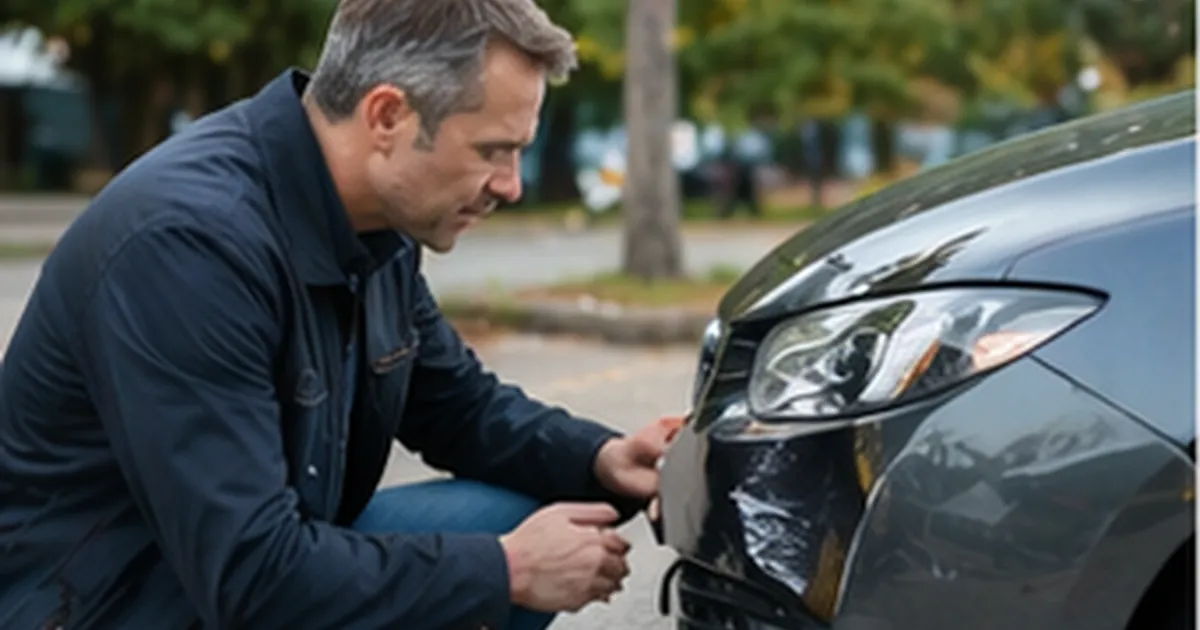
Insurance companies investigate claims. When an adjuster discovers the vehicle was hauling equipment, making deliveries, or transporting a client at the time of an accident, the personal policy's business-use exclusion activates. The claim is denied, and the driver and business owner become personally responsible for every dollar of damage.
ersonally responsible for every dollar of damage.This is not a rare outcome. Insurers routinely deny claims tied to undisclosed business use because commercial driving carries statistically higher accident frequency and severity. A denied claim can expose the business owner to six- or seven-figure liability depending on the severity of injuries involved.
- Claim denial — carrier refuses to pay any portion of the loss once business use is discovered
- Policy cancellation — insurer drops coverage entirely for material misrepresentation on the application
- Personal liability — owner pays damages, legal fees, and medical bills out of pocket with no insurer backstop
- Lawsuit exposure — injured parties sue both the driver and the business entity directly for the full amount
When Is Commercial Auto Insurance Required in Texas?
Several situations make commercial auto the only viable coverage option. While Texas does not use the term "commercial auto" in its statutes, practical and contractual requirements make it mandatory.
- Vehicles titled to a business entity — LLCs, corporations, and partnerships cannot insure company-owned vehicles on personal policies
- Commercial plates — any vehicle registered with Texas commercial plates must carry commercial insurance
- For-hire transportation — delivery vehicles, shuttle services, and freight haulers need commercial coverage with appropriate limits
- Heavy vehicles over 26,001 lbs GVW — commercial policies are required, plus FMCSA minimums for interstate operation
- Contract requirements — general contractors, property managers, and corporate clients frequently require $1M CSL from subcontractors
- Employee-driven vehicles — vicarious liability under respondeat superior creates exposure the business must insure against
Texas vicarious liability: Under the respondeat superior doctrine, Texas courts hold employers liable for accidents caused by employees operating vehicles within the scope of their employment. This applies even when the employee drives their own car. The business needs coverage for every vehicle use connected to operations.
What Does a Commercial Auto Policy Actually Cover?
Commercial auto mirrors personal auto structure but offers higher limits, broader options, and business-specific endorsements. Each component can be customized based on fleet size and risk exposure.
| Coverage Component | What It Protects | Typical Limits |
|---|---|---|
| Liability (BI/PD) | Injuries and property damage caused to third parties | $500K–$1M CSL |
| Collision | Damage to the insured vehicle from an accident | ACV or stated value |
| Comprehensive | Non-collision losses including theft, hail, vandalism, and flooding | ACV or stated value |
| Uninsured/Underinsured Motorist | Injuries caused by drivers without adequate coverage | Matches liability limits |
| Medical Payments | Medical costs for vehicle occupants regardless of fault | $5,000–$10,000 |
| Hired Auto | Rented or borrowed vehicles used for business | Matches policy liability |
| Non-Owned Auto | Employee personal vehicles used for business tasks | Matches policy liability |
Commercial policies use a symbol system to define which vehicles receive which coverages. Symbol 1 means "any auto" and provides the broadest protection. The declarations page shows which symbols apply to each coverage line.
- Symbol 1 (Any Auto) — broadest option covering owned, hired, non-owned, and newly acquired vehicles automatically
- Symbol 2 (Owned Autos Only) — covers only vehicles specifically scheduled and listed on the policy declarations
- Symbol 8 (Hired Autos) — covers rented, leased, or borrowed vehicles used for any business purpose
- Symbol 9 (Non-Owned Autos) — covers employee personal vehicles driven during the scope of their employment
Hired and Non-Owned Auto Coverage Explained
HNOA coverage fills two gaps that catch many Texas business owners off guard. I've seen this come up most often when an employee uses their personal car for a work errand, gets into an accident, and the business discovers it has no coverage for the resulting liability claim. These endorsements protect the business when using vehicles it does not own.
Hired auto coverage responds when the business rents, leases, or borrows a vehicle. A contractor who rents a truck for a weekend job needs this coverage to avoid relying on the rental company's minimal insurance, which typically covers only basic liability.
Non-owned auto coverage applies when employees drive personal vehicles for work. If an employee causes an accident running a company errand, the injured party can sue both the employee and the employer. The employee's personal policy pays first, but non-owned auto coverage fills the gap when damages exceed thos
Every business needs HNOA coverage. If any employee ever drives a personal car for any work purpose, including trips to the post office, client visits, or supply pickups, the business has non-owned auto exposure. An HNOA endorsement on a general liability or BOP policy costs roughly $150 to $400 per year and closes a serious liability gap.
$400 per year and closes a serious liability gap.How Much Does Commercial Auto Insurance Cost in Texas?
Texas commercial auto rates run higher than the national average due to traffic density, weather exposure, and high uninsured motorist rates. Premiums depend on vehicle type, use, driver records, and limits.
| Vehicle Type and Use | Annual Premium Range (Per Vehicle) |
|---|---|
| Sedan or SUV for sales and service calls | $1,200–$2,500 |
| Pickup truck for contractor use | $1,500–$3,500 |
| Cargo van for delivery operations | $2,000–$4,500 |
| Box truck under 26,000 lbs | $3,000–$6,000 |
| Heavy truck over 26,001 lbs | $8,000–$15,000+ |
| Hired and non-owned only (no fleet vehicles) | $150–$500 |
Driver records have the single largest impact on per-vehicle premiums. One at-fault accident can raise a vehicle's rate by 25 to 40 percent. A DUI or DWI conviction can make the driver uninsurable on standard commercial policies.
- High uninsured motorist rates — an estimated 14 to 18 percent of Texas drivers lack any insurance coverage at all
- Severe weather exposure — hail, flooding, and wind damage increase comprehensive claim frequency across the state
- Heavy traffic corridors — Dallas-Fort Worth and Houston rank among the most congested metro areas in the country
- Large vehicle population — Texas has more registered vehicles than every state except California, increasing collision frequency
How Can Texas Businesses Lower Commercial Auto Costs?
Controlling premiums requires proactive fleet management, not just shopping for cheaper quotes. When I review commercial auto accounts in Texas, the businesses paying the least per vehicle are the ones that screen driver MVRs at hire and enforce documented safety policies. Carriers reward businesses that demonstrate lower risk through safety programs and clean loss histories.
- Run annual MVR checks — screen driver records before hiring and annually to catch violations and remove high-risk drivers early
- Increase deductibles — raising collision and comprehensive deductibles from $500 to $1,000 or $2
- Bundle policies — combining commercial auto with a BOP or general liability policy often triggers multi-policy discounts of 10 to 15 percent s multi-policy discounts of 10 to 15 percent
- Install telematics and dash cameras — monitoring driving behavior can deliver 5 to 15 percent savings for safe-driving fleets
- Implement a written safety program — documented policies on distracted driving, speed limits, and vehicle maintenance demonstrate risk control
- Qualify for fleet pricing — businesses with five or more vehicles often receive per-vehicle discounts of 5 to 15 percent
Texas-Specific Rules for Commercial Auto Policies
Texas insurance law includes several provisions that apply to all auto policies, including commercial. Understanding these requirements helps business owners make informed coverage decisions.
Texas law requires carriers to offer PIP (Personal Injury Protection) on every auto policy. PIP covers medical expenses and lost wages for vehicle occupants regardless of fault. Businesses may reject PIP in writing, but doing so means employees involved in an accident must pursue the other driver's liability coverage for medical bills.
Uninsured and underinsured motorist coverage is automatically included unless specifically rejected in writing. Given that 14 to 18 percent of Texas drivers carry no insurance, maintaining UM/UIM coverage on commercial vehicles is strongly advisable.
- PIP coverage — must be offered on all Texas auto policies and can only be rejected in a signed written form
- UM/UIM coverage — automatically included on every policy unless the business rejects it with a written waiver
- Stacking — Texas allows stacking of UM/UIM limits across multiple vehicles on the same policy in some circumstances
- 30/60/25 minimums — state-mandated liability floor applies to all registered vehicles including those on commercial policies
The Bottom Line
Any Texas business that uses vehicles in its operations needs commercial auto insurance. Personal policies will not cover business use, and a denied claim can expose the owner to devastating financial liability. At minimum, every business should carry hired and non-owned auto coverage, even if it owns no vehicles. Businesses with company-owned trucks, vans, or cars need a full commercial auto policy with liability limits of at least $1 million CSL. The cost is predictable and manageable. The cost of being uninsured or underinsured is not. Compare carriers, review your fleet exposure, and lock in the right coverage now. Next step: get your free commercial auto quote to find out exactly what your business needs.
Frequently Asked Questions
Can I use personal auto insurance for a vehicle titled to my LLC?
No. Personal auto insurers will not cover vehicles titled to business entities. If your LLC, corporation, or partnership owns the vehicle, it must be insured on a commercial auto policy. Attempting to insure a business-titled vehicle on a personal policy is considered material misrepresentation and can void the policy entirely.
Do food delivery businesses need commercial auto insurance?
Yes. Vehicles making deliveries for compensation are engaged in for-hire use, which personal auto policies explicitly exclude. Whether the business employs drivers directly or uses independent contractors, the business needs commercial auto or non-owned auto coverage. Contractors should carry their own commercial or delivery endorsement as well.
What happens if an employee has an accident in a company vehicle?
The commercial auto policy responds as primary coverage. It pays for third-party injuries and property damage up to the policy's liability limits, covers damage to the company vehicle under collision coverage, and provides medical payments for occupants if that coverage is included. If damages exceed policy limits, a commercial umbrella policy provides additional protection.
How much does commercial auto insurance cost in Texas?
Costs range from roughly $1,200 per year for a sedan used for sales calls to $15,000 or more for heavy trucks. Hired and non-owned auto coverage without fleet vehicles costs $150 to $500 annually. Premiums depend on vehicle type, use classification, driver records, coverage limits, and the business's claims history.
What is the difference between hired auto and non-owned auto coverage?
Hired auto coverage applies to vehicles the business rents, leases, or borrows for business use. Non-owned auto coverage applies to employee-owned vehicles used for business purposes. Both are typically bundled as a single HNOA endorsement and protect the business from liability when using vehicles it does not own.
Does Texas require uninsured motorist coverage on commercial policies?
Texas automatically includes uninsured and underinsured motorist coverage on all auto policies unless the policyholder rejects it in writing. Given that an estimated 14 to 18 percent of Texas drivers are uninsured, maintaining UM/UIM coverage on commercial vehicles is strongly recommended.
What liability limits should a Texas business carry?
Most commercial auto policies carry at least $500,000 to $1 million in combined single limit (CSL) coverage. Many contracts require $1 million CSL as a minimum. Businesses with larger fleets, heavier vehicles, or higher-risk operations often carry $2 million to $5 million through a combination of primary and umbrella policies.
Can I get commercial auto insurance with a bad driving record?
Yes, but premiums will be significantly higher. Carriers in the non-standard or surplus lines market write policies for drivers with violations and at-fault accidents. A single at-fault accident can increase premiums by 25 to 40 percent. DUI or DWI convictions may require placement with a specialty carrier at substantially elevated rates.
Is commercial auto insurance tax deductible in Texas?
Yes. Commercial auto insurance premiums are a deductible business expense under IRS rules. The full premium for vehicles used exclusively for business is deductible. For vehicles with mixed personal and business use, only the business-use percentage of the premium qualifies. Consult a tax professional for your specific situation.
Do I need commercial auto insurance if I only use my car for client meetings?
It depends on your personal auto policy. Some personal policies permit limited business use such as driving to client meetings or between offices. However, if you make regular client visits, transport materials, or your vehicle is titled to a business entity, you likely need commercial coverage. Disclose all business use to your insurer and confirm in writing whether your current policy covers it.
Sources and References
- Texas Department of Insurance — Commercial Lines Overview — tdi.texas.gov/commercial
- Texas Department of Insurance — Auto Insurance Consumer Guide — tdi.texas.gov/consumer/auto-insurance.html
- Insureon — General Liability Insurance — insureon.com
- Travelers — General Liability Insurance — travelers.com