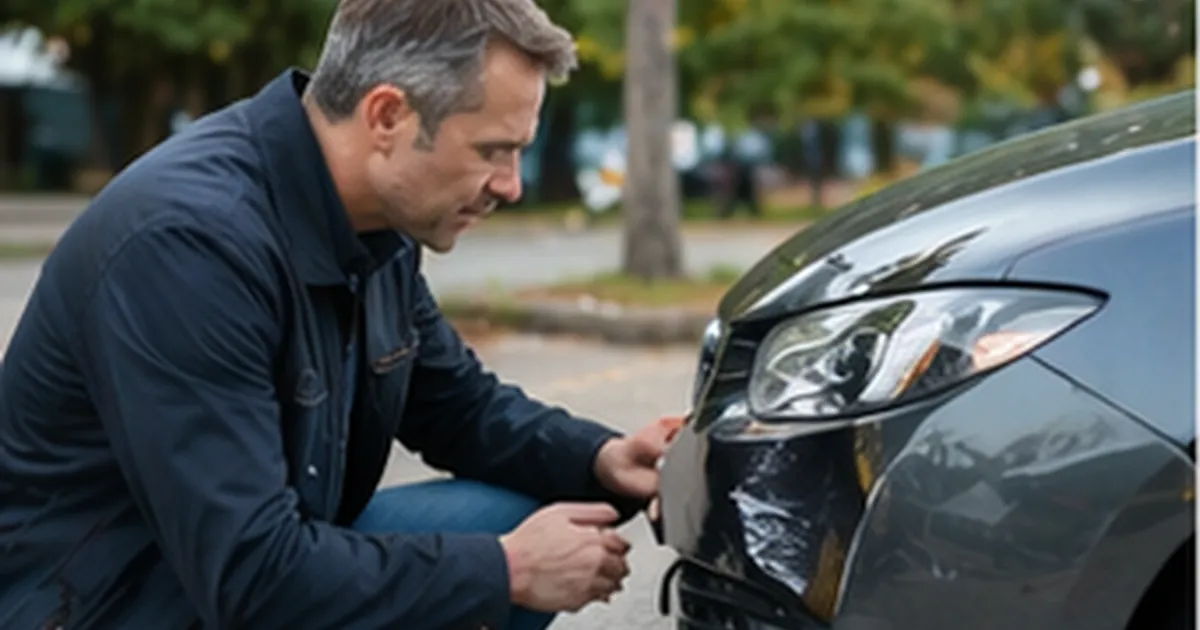
What to Do After a Car Accident in Texas: Insurance Steps
After a car accident in Texas, stop and check for injuries, call 911 if needed, exchange driver information, photograph the scene, file a police report for any collision exceeding $1,000 in damage, and notify your insurance carrier within 24 hours. Texas follows a modified comparative fault rule, meaning your recovery decreases by your percentage of fault.
Ready to compare? Get Your Free Quote
The Scene Documentation Trap
- Saying “I’m sorry” at the scene can be used by the other carrier to assign you fault and reduce your recovery by that percentage
- Texas requires a police report for any accident with injuries or $1,000+ in damage — skipping it weakens your claim from day 1
- Independent witnesses leave the scene in minutes — collecting 1 name and phone number can resolve a fault dispute that drags on for months
- Delayed medical evaluation breaks the causal link between the crash and your injuries, giving the carrier ammunition to deny treatment costs
The Real Numbers
- About 14% of Texas drivers carry zero insurance — that’s roughly 1 in 7, which means UM/UIM coverage is not optional, it’s essential
- Texas modified comparative fault bars recovery at 51% — if you’re found 51% at fault, your payout drops to exactly $0
- Property-damage-only claims settle in 2–6 weeks, but bodily injury claims take 3–12 months and disputed cases stretch to 3 years
- Most Texas auto accident attorneys charge 33% pre-litigation and 40% at trial — the catch is serious injuries almost always net more with counsel
The Post-Accident Timeline
- Notify your carrier within 24 hours — most Texas auto policies treat delayed reporting as grounds to limit or complicate your claim
- See a doctor within 48 hours even if you feel fine — whiplash, concussions, and soft tissue injuries commonly appear days later
- The 2-year statute of limitations starts at the accident date for both injury and property claims — missing it permanently bars your lawsuit
- First-party claims through your own carrier settle faster but require paying your deductible upfront — subrogation recovers it later if fault is clear
The Canopy Advantage
- We build auto policies across 18+ carriers with UM/UIM, PIP, and proper liability limits so you’re protected before the crash happens
- Your dedicated account manager walks you through the claims process after an accident, coordinating with adjusters on your behalf
- EJ Nadolny’s 15+ years means your coverage is structured to withstand a real Texas highway accident — not just meet the state minimum
- 99.1% client retention because we pair the right limits with the right carrier — claims get paid fairly instead of fought at every step
Do I have to call the police after every car accident in Texas?
Yes for most collisions. Texas Transportation Code Chapter 550 requires a report when an accident involves injury, death, or property damage over $1,000, which covers virtually all vehicle-to-vehicle crashes.
Should I file a claim with my insurance or the other driver's?
File with your own carrier for speed. Your insurer handles repairs and pursues subrogation against the at-fault driver's carrier, recovering your deductible if the other driver is found responsible.
How long do I have to file a lawsuit after a Texas car accident?
Two years from the date of the accident for both personal injury and property damage claims. Missing that deadline permanently bars your right to pursue compensation in court.
Immediate Steps at the Accident Scene
Stop your vehicle, turn on hazard lights, and check everyone for injuries before doing anything else. Texas law makes leaving the scene of an accident involving injury a felony, so remaining at the location is both a legal obligation and a practical necessity for protecting your insurance claim.
Immediate Steps at the Scene
- Call 911 for any injuries. Do not move seriously injured passengers unless they face immediate danger from fire or oncoming traffic, as movement can worsen spinal injuries
- Move drivable vehicles to the shoulder. Texas law allows you to clear the travel lanes if vehicles are operational, reducing the risk of secondary collisions in active traffic
- Exchange information with all drivers. Collect full names, phone numbers, addresses, driver license numbers, license plates, insurance carriers, and policy numbers from every party involved
- Photograph everything. Capture damage to all vehicles from multiple angles, the overall scene layout, traffic signals, road conditions, skid marks, and the other driver's insurance card and license
Independent witnesses carry significant weight in disputed claims. If bystanders saw the collision, ask for their names and phone numbers before they leave. A single credible witness statement can resolve fault disputes that would otherwise drag on for months between conflicting driver accounts.
Warning: Do not admit fault or apologize at the scene. Fault determination in Texas is a legal and insurance process that considers all evidence. Anything you say can be used by the other driver's carrier to reduce or deny your claim, even a well-meaning "I'm sorry."
The Police Report and Your Claim
In my experience advising Texas drivers after accidents, the police report is the document that carries the most weight with adjusters and carriers. The police report is the single most influential document in the claims process because adjusters from both carriers use it as their starting point for fault determination. Texas Transportation Code Chapter 550 requires drivers to report any accident involving injury, death, or property damage exceeding $1,000 to local law enforcement.
What the Police Report Documents
- Officer's narrative and diagram. The responding officer creates a written account of how the accident occurred and draws a diagram showing vehicle positions, directions of travel, and point of impact
- Traffic violations cited. If one driver received a citation for running a red light, speeding, or failing to yield, that citation becomes strong evidence of fault in the insurance investigation
- Driver and witness statements. Officers record statements from all parties and witnesses at the scene, creating a contemporaneous record that carries more credibility than later recollections
- Environmental conditions. The report notes weather, road surface conditions, lighting, and visibility factors that may have contributed to the accident or affected braking distances
You can obtain a copy of your police report from the investigating agency, typically within 10 business days. In Texas, you can also request crash reports through the TxDOT Crash Records Information System (CRIS). Having your own copy allows you to review the officer's fault assessment before your insurer contacts you, so you are prepared to correct any inaccuracies.
How Do You File an Insurance Claim After a Texas Accident?
I've seen this come up most often when a driver waits a week to file and the carrier questions whether the damage actually came from the reported accident. Contact your insurance carrier within 24 hours of the accident, because most Texas auto policies require prompt notice and delays can complicate your claim. When you call, provide the date, time, location, other drivers involved, and a factual description of what happened without speculating about fault.
You have two paths for filing a claim in Texas, and the right choice depends on fault clarity and how quickly you need your vehicle repaired.
| Claim Type | How It Works | Best When | Drawback |
|---|---|---|---|
| First-party (your carrier) | You file with your own insurer, who repairs your vehicle and pursues subrogation | Fault is disputed or you need fast repairs | You pay your deductible upfront (recovered later if other driver is at fault) |
| Third-party (at-fault driver's carrier) | You file directly with the other driver's insurer, who pays for your damages | Other driver is clearly at fault and their carrier accepts liability quickly | Slower process, other carrier may dispute fault, you have less control over timing |
What to Expect During the Claims Process
- Adjuster contact within 1-3 days. Your carrier assigns a claims adjuster who will contact you by phone or email to begin the investigation and may request a recorded statement
- Vehicle inspection and estimate. The adjuster inspects damage in person or directs you to an approved shop for an estimate, typically within the first week after filing
- Rental car coverage activation. If your policy includes rental reimbursement, your carrier arranges a rental vehicle while repairs are underway, usually capped at $30-$50 per day
- Subrogation if you filed first-party. Your insurer recovers repair costs and your deductible from the at-fault driver's carrier, returning your deductible to you once resolved
Pro Tip: Before accepting a total loss valuation, check comparable vehicle listings on Kelley Blue Book and local dealer sites. Texas law requires carriers to pay actual cash value, and you have the right to negotiate if the initial offer undervalues your vehicle based on its condition, mileage, and local market prices.
How Is Fault Determined in Texas?
Texas uses modified comparative fault, meaning fault can be shared and your payout shrinks by your fault percentage. Under Chapter 33 of the Civil Practice and Remedies Code, drivers found 51% or more at fault recover nothing from the other party.
For example, if your total damages are $40,000 and the investigation finds you 25% at fault, your recovery is reduced to $30,000. But if you are found 51% at fault, you cannot recover any damages from the other party and must rely entirely on your own collision coverage.
Evidence That Determines Fault
- Police report and citations. A traffic citation at the scene is strong evidence but not conclusive because the officer may not have witnessed the collision directly
- Physical evidence patterns. Skid mark length, point-of-impact location on each vehicle, debris scatter patterns, and final resting positions help reconstruct what happened
- Dashcam and surveillance footage. Video evidence is increasingly decisive in Texas fault disputes because it provides an objective, timestamped record of the collision sequence
- Witness statements. Independent witnesses who have no relationship to either driver carry the most weight, especially when the two drivers give conflicting accounts of the event
If you disagree with the fault determination, you can dispute it through the claims process, invoke the appraisal clause in your policy, or pursue litigation. An attorney experienced in Texas auto claims can evaluate whether a disputed determination is worth challenging based on the available evidence and the dollar amounts involved.
What Happens If the Other Driver Has No Insurance?
Roughly 14% of Texas drivers are uninsured according to the Insurance Information Institute, making uninsured motorist (UM) coverage one of the most valuable protections on your policy. If the at-fault driver carries no insurance, your UM coverage pays for your medical expenses, lost wages, and pain and suffering up to your policy limits.
UM/UIM Coverage in Texas
- UM is offered but not required. Texas insurers must offer uninsured/underinsured motorist coverage, but drivers can reject it in writing, which roughly 30% of Texas policyholders do
- UIM covers the gap. Underinsured motorist coverage activates when the at-fault driver has insurance but their limits are too low to cover your full damages and medical costs
- Stacking may apply. If you carry multiple vehicles on one policy, Texas law may allow you to stack UM/UIM limits across vehicles, increasing your total available coverage
- Suing uninsured drivers is difficult. You can sue an uninsured at-fault driver directly, but collecting a judgment from someone who could not afford liability insurance is rarely practical
Medical Attention After a Texas Car Accident
Some injuries do not produce symptoms until hours or days after the collision, making a prompt medical evaluation essential for both your health and your claim. Whiplash, concussions, internal bleeding, and soft tissue damage commonly have delayed onset, and waiting too long to see a doctor weakens the causal link between the accident and your injuries.
Medical Documentation Best Practices
- See a doctor within 48 hours. A medical record created shortly after the accident establishes a direct connection between the collision and your injuries, which is critical for any injury claim
- Follow the treatment plan completely. Gaps in treatment give the opposing carrier ammunition to argue your injuries were not serious or that you failed to mitigate your damages
- Keep all receipts and records. Save every medical bill, pharmacy receipt, physical therapy invoice, and mileage log for treatment-related travel to document the full cost of your injury
Note: Texas personal injury protection (PIP) coverage pays your medical expenses regardless of fault, up to your PIP limits. Texas insurers must offer PIP, but you can decline it. If you have PIP, it begins paying immediately without waiting for fault determination, covering medical bills and a portion of lost income.
How Long Does a Texas Auto Insurance Claim Take to Settle?
Property-damage-only claims settle in two to six weeks when fault is clear. Bodily injury claims take three to twelve months because treatment must finish before the claim can be fully valued, and complex disputed cases can stretch to three years.
Factors That Extend Settlement Timelines
- Disputed fault percentages. When both carriers reach different fault conclusions, negotiations can stall for months while each side gathers additional evidence and expert opinions
- Ongoing medical treatment. Settling before you reach maximum medical improvement risks accepting a payout that does not cover future treatment costs or permanent impairment
- Policy limits disputes. If your damages exceed the at-fault driver's liability limits, recovering the full amount requires pursuing the driver's personal assets or your own UIM coverage
- Litigation involvement. Filing a lawsuit resets the timeline because discovery, depositions, and trial scheduling can add 12 to 24 months beyond the initial claim filing date
Texas law does not set a specific deadline for insurers to settle claims, but the Texas Department of Insurance requires carriers to acknowledge claims promptly, begin investigations within 15 days, and accept or deny claims within 15 business days after receiving all necessary documentation. Unreasonable delays may constitute unfair claims practices under the Texas Insurance Code.
When to Hire an Attorney
Not every accident requires legal representation, but an attorney becomes important when injuries are serious, fault is contested, or the carrier's settlement offer falls well below your documented damages. Most Texas auto accident attorneys work on contingency, typically charging 33% of the settlement before litigation and 40% if the case goes to trial.
When Legal Representation Adds Value
- Serious or permanent injuries. Claims involving surgery, extended rehabilitation, or permanent impairment require professional valuation to avoid accepting a settlement far below the claim's true worth
- Disputed fault above 25%. When the carrier assigns you significant fault, an attorney can gather independent evidence, hire accident reconstruction experts, and negotiate the percentage down
- Uninsured or underinsured at-fault driver. Navigating UM/UIM claims, stacking rules, and potential lawsuits against the uninsured driver requires legal knowledge most policyholders lack
- Commercial vehicle involvement. Accidents involving commercial trucks, delivery vans, or rideshare vehicles add layers of liability, multiple insurance policies, and federal regulations
The Bottom Line
A Texas car accident demands a clear sequence: ensure safety, call the police, exchange information, photograph the scene, and notify your insurance carrier within 24 hours. Understanding whether to file first-party or third-party, how comparative fault reduces your recovery when you share blame, and why prompt medical attention protects both your health and your claim puts you in the strongest position to recover fairly. Carry UM/UIM coverage to protect yourself against the roughly one-in-seven Texas drivers who have no insurance at all.
Next step: get a free auto insurance quote and confirm your coverage is strong enough before a crash happens.
Frequently Asked Questions
What information should I collect from the other driver at the scene?
Collect full name, phone number, home address, driver license number, license plate number, insurance carrier name, and policy number. Also note the make, model, color, and year of their vehicle. If passengers are present, get their names and contact information as well.
Can I choose my own repair shop in Texas?
Yes. Texas law gives you the right to select any licensed repair facility. Your insurance carrier cannot require you to use a specific shop, though they may recommend preferred shops that offer guaranteed work and streamlined billing.
What is subrogation and how does it affect my deductible?
Subrogation is the process where your insurer recovers repair costs from the at-fault driver's carrier after paying your claim. Once subrogation succeeds, your carrier refunds your deductible. The timeline varies but typically takes two to six months after the claim closes.
Does my insurance rate go up after an accident that was not my fault?
Texas law prohibits insurers from raising your rate solely because you filed a not-at-fault claim. However, your rate may increase at renewal if you have multiple claims of any type within a short period, as frequency signals higher risk to underwriters.
What is the minimum auto insurance required in Texas?
Texas requires 30/60/25 minimum liability coverage: $30,000 per person for bodily injury, $60,000 per accident for bodily injury, and $25,000 per accident for property damage. These minimums are often insufficient for serious accidents.
How does PIP coverage work in Texas auto insurance?
Personal injury protection pays your medical expenses and a portion of lost income regardless of who caused the accident, up to your PIP limit. Texas insurers must offer PIP, but you can decline it in writing. PIP pays immediately without waiting for fault determination.
What should I do if the other driver's carrier denies my claim?
Request the denial in writing with the specific reasons cited. You can file a complaint with the Texas Department of Insurance, invoke the appraisal clause in your policy, or consult an attorney about pursuing the claim through litigation within the two-year statute of limitations.
Are dashcams legal in Texas and do they help with claims?
Dashcams are legal in Texas as long as they do not obstruct your view. They provide objective, timestamped evidence that frequently resolves disputed fault determinations quickly. A front-facing dashcam costs $50 to $150 and can save thousands in a contested claim.
Resources Used
- Texas Department of Insurance — Auto Insurance Consumer Guide
- Insurance Information Institute — Auto Insurance Facts and Statistics
- Insurance Information Institute — Uninsured Motorists Background
- NAIC — Auto Insurance Topic Page
- Texas Civil Practice and Remedies Code Chapter 33 — Proportionate Responsibility
- Texas Transportation Code Chapter 550 — Accidents and Accident Reports