Bad Faith Insurance Claims in Texas: What It Means When Your Carrier Won’t Pay
Texas Insurance Code Chapter 541 gives policyholders the right to sue an insurer that misrepresents coverage, refuses to investigate, or denies a claim without explanation. The statute prohibits a specific list of unfair settlement practices, and a knowing violation can trigger up to 3 times actual damages plus attorney fees. The catch is that proving “knowing” conduct requires more than a lowball offer or slow response, so understanding exactly which insurer actions cross the line determines whether a bad faith claim has teeth.
Before You File a Bad Faith Claim
- Gather your full policy, every denial letter, adjuster emails, and records of any delayed or reduced payments before taking action.
- You need actual damages from the insurer’s conduct to bring a private action under Texas Insurance Code 541.151.
- Texas law sets a strict filing deadline on bad faith suits, so delays after the insurer’s wrongful act can bar your claim entirely.
What You Need for a Bad Faith Claim
- You must show the insurer violated at least one prohibited practice listed in Texas Insurance Code 541.060, such as refusing to investigate or explain a denial.
- Gather records of actual damages before pursuing a private action because Texas Insurance Code 541.151 requires proof of real financial harm caused by the violation.
- A complaint to the Texas Department of Insurance is optional but builds a paper trail that documents the insurer’s conduct independently of a lawsuit.
How a Bad Faith Claim Unfolds
- Start by requesting the insurer’s written basis for denying or underpaying your claim, since Texas law prohibits refusing without explanation.
- Build your record during the middle phase by saving every letter, email, and adjuster report that shows delayed or inadequate investigation.
- Resolution comes through a private action in court, where Texas law allows recovery of actual damages plus court costs and attorney fees.
What Bad Faith Costs the Insurer
- Courts can multiply the actual damages award by up to 3 when the insurer’s violation of Chapter 541 was knowing or intentional.
- Actual damages cover the full unpaid or underpaid claim amount along with any consequential financial losses caused by the insurer’s conduct.
- Fee-shifting provisions mean a successful claimant pays nothing out of pocket for legal representation because the court orders the insurer to cover those costs.
What are the consequences of a bad faith insurance claim in Texas?
Under Texas Insurance Code Chapter 541, a policyholder who proves bad faith can recover actual damages, court costs, and reasonable attorney fees through a private cause of action. For knowing violations, the court can award up to 3 times actual damages.
How much is a bad faith claim worth?
There is no fixed figure because recovery is tied to what the policyholder actually lost. Under Texas Insurance Code 541.152, successful claims recover actual damages, court costs, and reasonable attorney fees, with knowing violations eligible for up to 3 times actual damages.
What constitutes a bad faith insurance claim?
Under Texas Insurance Code Chapter 541, bad faith occurs when an insurer misrepresents policy provisions, fails to attempt a prompt good-faith settlement, refuses to explain a denial, or rejects a claim without conducting a reasonable investigation. Texas recognizes both common law and statutory bad faith claims.
The Bottom Line Up Front
Texas policyholders facing an unreasonable claim denial or delay have two distinct legal routes: common law bad faith and statutory bad faith under Texas Insurance Code Chapter 541. These paths work independently of each other. The real question is not whether the insurer acted unfairly but which legal framework applies, what evidence you need, and whether an administrative complaint or a private lawsuit better fits your situation.
Chapter 541 of the Texas Insurance Code identifies specific prohibited settlement practices. These include misrepresenting policy provisions, failing to attempt a prompt good-faith settlement, not explaining why a claim was denied, and refusing to pay without a reasonable investigation. A policyholder who suffers actual damages from these violations can bring a private action under Section 541.151. Courts can award up to 3 times actual damages for knowing violations, plus court costs and reasonable attorney fees. A TDI administrative complaint is a separate path that triggers a regulatory review rather than a court case.
- Texas recognizes both common law and statutory bad faith as independent grounds for an insurance claim.
- Chapter 541 prohibits specific insurer practices including misrepresentation, settlement delays, and unexplained denials.
- A private lawsuit under Section 541.151 requires proof that the insurer’s conduct caused actual damages.
- Knowing violations can result in court-ordered damages up to 3 times the proven actual loss.
- Filing a TDI administrative complaint and pursuing a private lawsuit are two separate processes.
What Bad Faith Means Under Texas Insurance Law
Bad faith under Texas insurance law means an insurer violated its duty to handle a policyholder’s claim honestly and fairly. Two legal theories apply. Common law bad faith arises from the implied covenant of good faith and fair dealing built into every insurance contract. Statutory bad faith is governed by Texas Insurance Code Chapter 541, which identifies specific deceptive and unfair claim-handling practices and prohibits each one by name.
Chapter 541 spells out what insurers cannot do. Misrepresenting material facts or policy provisions is prohibited. So is failing to attempt a good-faith and prompt settlement when the insurer’s liability is reasonably clear. An insurer that refuses to pay a claim without conducting a reasonable investigation violates the statute, and denying coverage without explaining the basis for that denial is a separate violation. The common law theory, rooted in a landmark Texas Supreme Court decision, adds a broader standard: the insurer breaches its duty whenever it puts its own financial interest above the policyholder’s contractual right to benefits.
Policyholders who prove either theory can recover the original benefits the insurer should have paid. Texas Insurance Code Section 541.152 adds enforcement teeth: court costs and reasonable attorney fees are recoverable, and up to 3 times actual damages may apply when the insurer acted knowingly. Both paths often apply at once. The same insurer conduct, stalling payment, ignoring evidence during the claims investigation, or misrepresenting what the policy actually covers, can trigger liability under both the implied covenant and Chapter 541. Filing under both theories gives the policyholder two independent bases for recovery in the same lawsuit.
Nine Prohibited Practices That Trigger a Bad Faith Claim
Chapter 541 of the Texas Insurance Code identifies specific insurer conduct that constitutes unfair settlement practices. Section 541.060(a) prohibits nine distinct acts. Each one stands as an independent basis for a statutory bad faith claim, meaning a policyholder can build a case around any single violation without proving the other eight. The remedies attached to these prohibitions include penalty provisions reserved for insurer misconduct.
Four prohibitions surface repeatedly in Texas bad faith cases. Misrepresenting material facts or policy provisions violates Section 541.060(a)(1). Failing to attempt a good-faith prompt settlement when liability is reasonably clear violates subsection (a)(2). Failing to provide a policyholder with a reasonable explanation for denying a claim violates subsection (a)(3). Refusing to pay a claim without first conducting a reasonable investigation violates subsection (a)(7). The remaining prohibited acts address unreasonable delays in acknowledging coverage, lowball settlement offers that disregard the evidence supporting the claim, and tactics that force policyholders into court to collect amounts already owed.
When a policyholder proves any of these prohibited practices caused actual damages, Section 541.151 grants the right to bring a private action. Remedies extend beyond the original policy benefits. Section 541.152 provides for court costs and reasonable attorney fees. For knowing violations, the statute authorizes up to 3 times actual damages. That treble-damage exposure gives these nine prohibitions real force. An insurer facing a statutory bad faith claim is not just defending against the unpaid policy amount but against a penalty structure the legislature built to make systematic claim abuse more expensive than honoring what the policy owes.
How to Prove Bad Faith Against Your Insurer
Proving bad faith requires showing your insurer had no reasonable basis for its claims-handling decision and that you suffered actual damages as a direct result. Texas Insurance Code Section 541.151 confirms that a person with actual damages may bring a private action against the insurer. The two legal theories discussed earlier demand different evidence, and understanding which path applies to your situation determines what you need to document.
For statutory bad faith under Chapter 541, your evidence must connect the insurer’s conduct to specific prohibited practices. If your insurer refused to pay without conducting a reasonable investigation, or failed to explain its denial basis, those acts are independently actionable. You do not need to prove malice. The statutory standard is objective. Common law bad faith carries a steeper burden, and Texas courts have clarified that a policyholder must demonstrate egregious conduct beyond a simple underpayment or processing delay before common law liability attaches.
Start building your evidence file the day you submit the claim. Save every email, letter, recorded call, adjuster report, and written estimate. Document each deadline missed. Log each request you answered and each document you provided on time. When the insurer’s own claims file shows it ignored submitted evidence or skipped steps its own guidelines require, that internal record becomes powerful proof of unreasonable handling. Texas courts award court costs and reasonable attorney fees under Section 541.152(a), and knowing violations can result in up to 3 times actual damages under Section 541.152(b).
Keep a written log with dates and summaries of every interaction with your insurer. Note who you spoke with, what was discussed, and whether any promises or commitments were made during the conversation. When your insurer sends you paperwork, read it closely and respond in writing so your position is documented. Verbal agreements are difficult to prove later, and a paper trail protects your account of what happened.
Gather independent assessments of your damage from professionals who are not affiliated with your insurance company. A contractor’s repair estimate, a medical provider’s treatment summary, or an independent adjuster’s report can each serve as evidence that the insurer’s own evaluation fell short. Compare what your insurer offered or concluded against what independent professionals found, and keep those comparisons organized in a single file you can hand to an attorney.
Talk to an attorney who handles insurance disputes before you file a complaint or accept a settlement. An experienced attorney can review your documentation, identify gaps in your evidence, and advise whether your situation warrants formal action. Many attorneys in this area offer an initial consultation at no upfront cost, which gives you a chance to understand the strength of your case before committing to a specific path forward.
Damages Available in a Texas Bad Faith Case
Policyholders who prove bad faith can recover far more than the unpaid claim. The damages stack. Texas Insurance Code Section 541.151 authorizes any person with actual damages to bring a private action against the insurer, and the statutory remedies layer on top of contract recovery. Section 541.152(a) adds court costs and reasonable attorney fees. For knowing violations, Section 541.152(b) allows courts to award up to 3 times actual damages.
| Damage Category | What the Policyholder Recovers | Legal Authority |
|---|---|---|
| Policy Benefits | Full amount owed under the insurance contract | Contract claim |
| Statutory Interest | Penalty interest on claim payments wrongfully withheld past the statutory deadline | |
| Court Costs and Attorney Fees | Reasonable legal costs of bringing the bad faith action | Texas Insurance Code Section 541.152(a) |
| Treble Damages | Up to 3 times actual damages when the insurer acted knowingly | Texas Insurance Code Section 541.152(b) |
| Consequential Damages | Out-of-pocket losses caused by the insurer’s delay or denial beyond the policy amount | Common law bad faith |
The treble damages provision separates bad faith from an ordinary coverage dispute. In a contract claim, the insurer pays what it owed. A knowing bad faith finding changes the outcome entirely, because the court can multiply actual damages by 3 and then add attorney fees, court costs, and consequential losses the policyholder incurred while the insurer wrongfully withheld payment. When a policyholder incurred out-of-pocket costs because the insurer refused to pay a valid claim on time, those losses become recoverable too. Carriers that handle claims dishonestly face financial consequences well beyond the original policy amount.
When to File a TDI Complaint vs Hire an Attorney
File a TDI complaint when you want the state to investigate your insurer’s conduct. Hire an attorney when your goal is recovering money. TDI can fine the insurer and force corrective action, but it cannot order payment on your claim. Only a lawsuit gives you access to the damages remedies Texas law provides for bad faith.
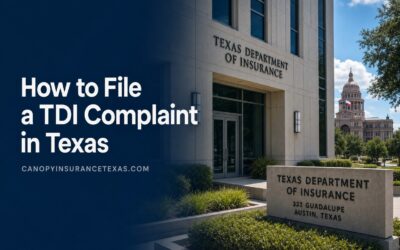
A TDI complaint is free to file online or by phone. The Texas Department of Insurance investigates whether the insurer violated the Insurance Code, and if the department confirms a violation, consequences range from fines to license revocation. That regulatory pressure matters. But TDI’s authority stops at discipline. The department cannot order your insurer to pay the claim, reimburse out-of-pocket costs, or compensate you for the months your benefits were wrongfully withheld. A TDI complaint creates a regulatory paper trail and can support a later lawsuit, but it does not recover a single dollar on its own.
An attorney can file suit, negotiate a settlement, and take the insurer to trial. Most Texas bad faith attorneys work on contingency, meaning you pay nothing unless they win a recovery. Both paths can run at the same time. Filing a TDI complaint while your attorney prepares the lawsuit creates parallel pressure and builds a documented record for court.
Filing a TDI complaint while your attorney pursues the civil case does not create a conflict between the two tracks. Let your attorney know you filed the complaint so they can coordinate timing and avoid duplicating requests the department already made.
When choosing an attorney, look for someone whose practice focuses on insurance disputes rather than general litigation. Ask how many carrier bad faith cases they have handled, whether they have taken cases to trial or primarily settle, and how they communicate case updates. Many attorneys offer a free first consultation, which gives you a chance to evaluate whether the attorney understands your specific coverage type and the insurer you are dealing with.
Keep your own file organized from the start. Save every letter, email, and claim number your insurer sends. Screenshot your online portal if the status changes. Write down the dates and names from every phone call. That documentation becomes evidence whether you go the TDI route, the lawsuit route, or both. The stronger your paper trail, the harder it becomes for the carrier to dispute what happened and when.
How Your Insurance Agent Can Help Before It Gets to Bad Faith
Your insurance agent can intervene before a claims dispute reaches the point of bad faith. Agents who wrote the policy understand your coverage and have direct access to the carrier’s claims department. They can escalate a stalled claim, request a supervisor review of a denied or underpaid amount, and push the carrier to put its reasoning in writing. That intervention alone resolves many disputes.
The documentation your agent creates during this process has a second purpose. Every email requesting a status update, every written summary of what the adjuster inspected, and every carrier response explaining its valuation builds a chronological record of how the company handled your claim. If the insurer later argues it conducted a prompt and thorough investigation, that record either supports or contradicts the argument. Ask your agent to get coverage confirmations in writing before the carrier issues its final decision. A written confirmation that your policy covers the claimed loss prevents the company from reinterpreting exclusions after the fact.
Recognize when the agent’s role ends. Agents depend on carrier relationships for their livelihood, which caps how aggressively they will push back on a denial. If your agent has escalated the claim, obtained written explanations for the carrier’s position, and the insurer still refuses to pay without a reasonable basis, the agent has exhausted their leverage. At that point the paper trail your agent built becomes the foundation a bad faith attorney needs. A file full of documented requests, ignored follow-ups, and contradictory carrier explanations gives an attorney concrete evidence to work with from the first consultation.
The Bottom Line
Texas law gives policyholders real protection when an insurer handles a claim dishonestly. Chapter 541 of the Texas Insurance Code defines nine prohibited settlement practices, and Section 541.151 creates a private cause of action for anyone who suffers actual damages from those violations. The damages go beyond the unpaid claim, with treble damages possible when the insurer acted knowingly.
What matters most is acting early and choosing the right path. Your insurance agent can advocate with the carrier before the dispute escalates. A TDI complaint brings state investigators into the picture. An attorney pursues financial recovery. Document every interaction with your insurer, know which conduct crosses the line under Section 541.060, and match your response to your goal.
Frequently Asked Questions
Is bad faith hard to prove in Texas?
Texas recognizes both common law and statutory bad faith claims, and each has different proof requirements. For a common law claim, the policyholder must show the insurer had no reasonable basis for denying or delaying the claim and that the insurer knew or should have known there was no reasonable basis. Statutory bad faith under Chapter 541 can be more straightforward because the policyholder points to specific prohibited acts, such as failing to attempt a good-faith prompt settlement or refusing to pay without a reasonable investigation. Documenting every interaction with your insurer strengthens either path.
What are the two types of bad faith claims under Texas law?
Texas law provides two distinct paths for challenging insurer misconduct. Common law bad faith is rooted in the duty of good faith and fair dealing that every insurer owes its policyholder. This claim requires showing the insurer denied or delayed payment without a reasonable basis. Statutory bad faith falls under Chapter 541 of the Texas Insurance Code, which lists specific prohibited practices including misrepresenting policy provisions, failing to explain the basis for a denial, and refusing to pay without conducting a reasonable investigation. A policyholder can pursue both types in the same lawsuit, and each carries its own remedies.
What does the Unfair Claims Settlement Practices Act prohibit in Texas?
The unfair settlement practices provisions in Texas Insurance Code Section 541.060 list specific insurer behaviors that qualify as statutory bad faith. These include misrepresenting material facts or policy provisions, failing to attempt a good-faith prompt settlement when liability is clear, failing to explain the basis for a claim denial, and refusing to pay a claim without conducting a reasonable investigation. These are not vague standards. Each one describes a concrete action or failure to act that a policyholder can identify and document during the claims process. Filing a complaint with the Texas Department of Insurance is one path for enforcement.
What is the Texas Prompt Payment of Claims Act?
The Prompt Payment of Claims Act, found in Chapter 542 of the Texas Insurance Code, sets deadlines for how quickly an insurer must acknowledge, investigate, and pay or deny a claim. When an insurer misses these deadlines without a valid reason, the policyholder may be entitled to interest penalties on the withheld amount plus attorney fees. Chapter 542 operates separately from the bad faith provisions in Chapter 541. A policyholder can pursue a prompt payment violation alongside a bad faith claim, giving two independent legal grounds for holding the insurer accountable for delays.
What role does the Texas Commissioner of Insurance play in bad faith disputes?
The Commissioner of Insurance oversees the Texas Department of Insurance, which accepts and investigates complaints against insurers. When a policyholder files a complaint with TDI, the department can investigate whether the insurer violated the Insurance Code and take administrative action, including fines or license sanctions. However, TDI’s administrative process does not award damages directly to the policyholder. A person who has suffered actual damages from an insurer’s unfair practices retains the separate right to bring a private lawsuit under Texas Insurance Code Section 541.151. The administrative complaint and the private legal action are independent paths.
When should I hire a bad faith insurance attorney?
Consulting an attorney becomes important when your insurer has denied a valid claim without a clear explanation, delayed payment beyond reasonable timelines, or offered a settlement far below your documented losses. A bad faith insurance attorney can evaluate whether the insurer’s conduct violates Chapter 541 of the Texas Insurance Code, including prohibitions against failing to attempt good-faith settlement and refusing to pay without a reasonable investigation. Under Section 541.152, a successful claim can result in court costs and reasonable attorney fees, which means many attorneys handle these cases on a contingency basis. Starting the conversation early preserves your ability to document insurer misconduct.